
Tag: Retirement Guide

  • What Retirees Do All Day: Top Activities for a Meaningful and Active Retirement

    What Retirees Do All Day: Top Activities for a Meaningful and Active Retirement

    Planning for a fulfilling retirement is a crucial step in securing financial security and overall well-being. However, navigating this new chapter can raise questions about how best to utilize newfound free time. So, what do you need to do to answer this question? Well, look at the data and see how other seniors and retirees are doing with their time.

    So, this article explores how retirees typically spend their days, drawing on data from the American Time Use Survey by the Bureau of Labor Statistics (BLS). We will delve into the most popular activities among retirees, highlighting the importance of staying active and engaged for a happy and healthy retirement.

    Popular And Common Retirement Activities According To BLS

    Your upcoming retirement is likely something you’re both looking forward to and apprehensive about. Many people initially struggle with how to fill their days. However, knowing what other retirees do can be reassuring.

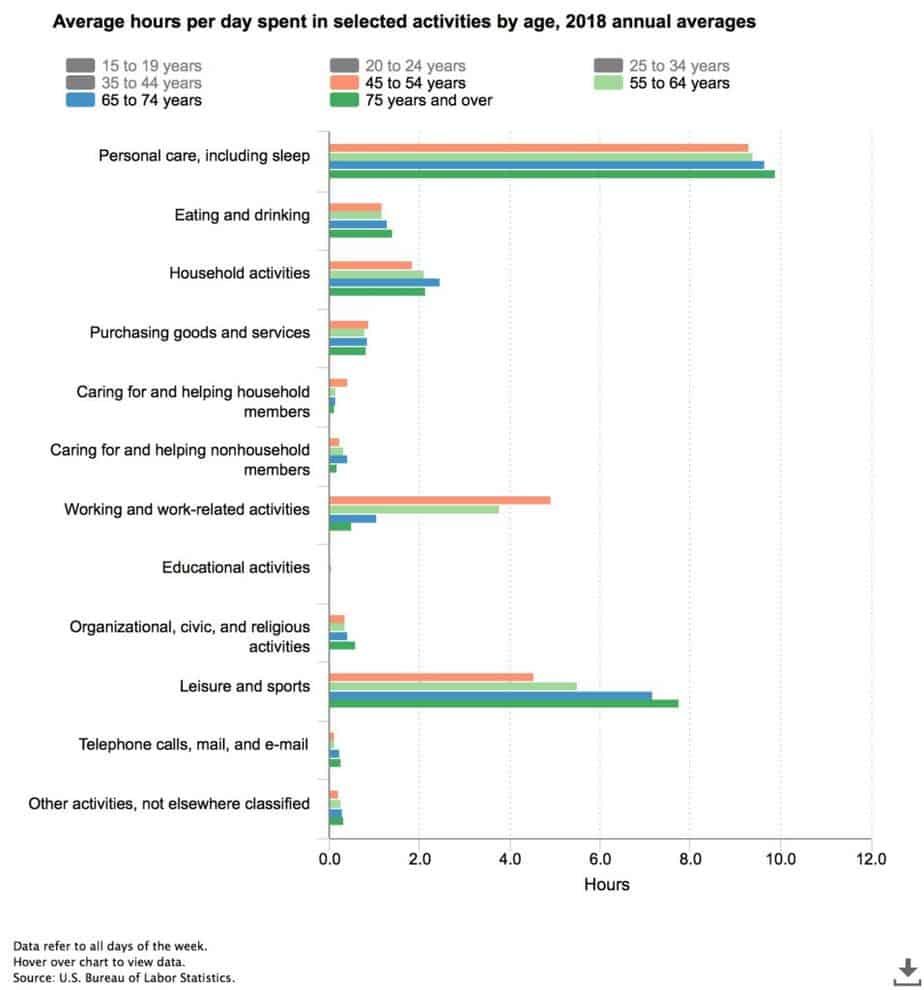
    The American Time Use Survey by the BLS offers valuable insights. Most retirees spend their days engaged in normal activities like sports, socializing, traveling, and personal care (including sleep). According to the survey, people between 65 and 75 years old and over dedicate an average of over nine hours a day to personal care activities. Leisure and sports activities occupy another seven or more hours.

    Household chores (around two hours daily) and eating/drinking (approximately one and a half hours daily) are also common time commitments. Interestingly, the survey reveals that work-related activities decrease as people age. When comparing the 45โ€“64 and 65+ age groups, the most significant change is in work-related activities, which is logical due to retirement.

    Below is a snapshot of the American Time Use Survey chart from BLS:
    You can see the full article on the website of BLS

    The chart initially surprised me with its low numbers for educational activities among retirees. However, it’s important to clarify that this category likely refers to formal schooling or college courses.

    In reality, activities like reading (which can be highly educational) or taking online courses fall under ‘leisure activities’ in the survey. Regardless of the label, staying active mentally is crucial for healthy aging.  When you keep learning, you keep your brain sharp and contribute to mental fitness. We’ll explore this further later.

    The listed activities in the survey are too broad, so Iโ€™m going to break them down in the next section.

    A Breakdown Of Popular And Common Activities In Retirement

    Popular activities in retirement can be categorized in several ways. One approach focuses on physical, mental, and social aspects. Another breaks them down into basic needs, leisure, and health maintenance.

    This article will explore these categories and provide tips for incorporating them into your lifestyle, even if you haven’t already.

    Physical Activities

    Staying active is key for retirees to thrive. Regular exercise isn’t just about maintaining a healthy weight or warding off chronic diseases like heart trouble and diabetes. It’s a powerful tool to boost energy levels, improve mood, and enhance overall well-being.

    Think about daily walks in nature or group exercise classes designed specifically for retirees. The Centers for Disease Control and Prevention (CDC) recommends at least 150 minutes of moderate-intensity aerobic activity each week for adults over 65, along with muscle-strengthening exercises two or more days a week.

    Incorporating physical activity doesn’t have to be complicated. Schedule those walks, join a local fitness class, or explore low-impact options like swimming or yoga. To push yourself further, set specific fitness goals, track your progress, and gradually increase the intensity or duration of your workouts.

    Read my article, How Can You Stay Active in Retirement, for more ideas. Meanwhile, let me talk about two of the most common physical activities my retiree friends often do.

    Walking

    Walking is a very popular and common activity for retirees. It’s a great way to boost your health and happiness in several ways.

    First, walking with others is a fun way to make new friends. You’ll meet people who enjoy being active and exploring new places, just like you. Plus, having company can make your walks more enjoyable.

    Second, walking regularly helps you stay active, which is important for your overall health. It keeps your body moving and your muscles strong.

    Finally, walking can improve your mood and make you feel more positive. It’s a great way to get some fresh air and sunshine, which can boost your spirits.

    By the way, a study by Korean researchers suggests that walking faster might give you even more benefits. But remember, the most important thing is to get out there and start walking, no matter your pace. Walking is a simple activity with big rewards for your health and happiness in retirement!

    Swimming

    Swimming is a popular choice for retirees seeking a refreshing, social, and low-impact exercise option. Local pools and aquatic centers offer opportunities for physical activity, relaxation, and socializing with peers.

    Social swimming activities can take various forms, including water aerobics classes, joining a master’s swim club, or simply organizing group swims with friends.

    A study published in the International Journal of Aquatic Research and Education explored the health benefits of swimming. Their findings suggest that swimming is an effective way to improve cardiovascular fitness (CRF) for both healthy individuals and those with chronic diseases.

    The study highlights the various health advantages of swimming, positioning it as a valuable alternative to other forms of exercise. Interestingly, the results indicate that swimming might be just as beneficial as running, and potentially more advantageous than walking or inactivity altogether.

    Mental Activities

    Just like physical exercise keeps your body strong, mental stimulation helps your brain stay sharp. Reading, puzzles, and games aren’t just funโ€”they can actually enhance your memory, problem-solving skills, and overall cognitive function. Studies even suggest mental activities might help ward off cognitive impairment and decline.

    Think beyond crossword puzzles (though those are great too!). Imagine lively book clubs, fascinating lectures, or even learning a new language. Spark your curiosity and social connections by joining discussion groups or taking up a mentally stimulating hobby like painting or photography.

    There are many ways of staying mentally active. To get some ideas, check out my article: How Do I Keep My Brain Active In Retirement. Meanwhile, continue reading to know some mental activities I wholly recommend. 

    Take A Class

    A mental activity I love personally is taking classes. Taking a class isn’t just about acquiring new skillsโ€”it’s also a social adventure with a sprinkle of personal growth. Imagine whipping up culinary masterpieces in a cooking workshop, capturing stunning photos in a photography class, or letting your creativity flow in an art session.

    The benefits are more than just bragging rights, although those are fun too! According to Knute Nelson, a non-profit organization serving seniors, continued learning may help older adults increase neuron generation, reduce dementia risks, and improve their ability to handle challenges.

    Community colleges, adult education programs, and online platforms offer a treasure trove of options. Look for courses that ignite your curiosity, whether it’s mastering a new language, delving into history, or finally learning that instrument you always dreamed of playing.

    When you get yourself enrolled, don’t just be a passive participant! Dive headfirst into discussions, collaborate with classmates, and find ways to apply your newfound knowledge. Maybe you’ll bake a gourmet cake from your cooking class for a family gathering or showcase your photography skills with a local exhibit.

    For an extra dose of inspiration, consider MasterClass. This unique platform lets you learn from the best in the field. Follow a tennis clinic from Serena Williams, a cooking class by Gordon Ramsey, or a comedy class by Steve Martin! Learning a new skill has never been easier or more engaging.

    Meditation 

    Meditation, a form of mindfulness practice, offers a valuable tool for retirees seeking to manage stress and cultivate inner peace. It provides a structured approach to emotional regulation, promoting a sense of calm and well-being.

    While research on the full range of physical and mental health benefits for seniors is ongoing, studies consistently show that mindfulness activities like meditation are enjoyable and well-tolerated by older adults. This enjoyment itself can be a significant factor in promoting continued engagement with the practice.

    Integrating meditation into a daily routine is easier than you might think! Many applications and online resources offer guided meditations, perfect for beginners. These short sessions can help you develop comfort and familiarity with the practice.

    As you become more comfortable with meditation, consider exploring various techniques. Popular options include mindfulness meditation, loving-kindness meditation, and body scan meditation. Each technique offers a unique approach, so finding the one that resonates most with you is key to sustained practice.

    Social Activities

    Social connection is the cornerstone of a happy and healthy retirement. Retirees understand this well, actively seeking out opportunities to connect with others. After all, social activities can push someone to become more active and offer a powerful antidote to loneliness, fostering a sense of belonging and purpose.

    Imagine nurturing your passion for gardening with a local club, tackling challenging hikes with a group of fellow enthusiasts, or delving into new worlds with a vibrant book club. These activities provide much more than shared experiences. They offer companionship, support, and meaningful interactions that enrich your life.

    The benefits extend beyond the immediate joy of social connection. A study on social engagement patterns in underprivileged communities across six countries suggests that social activity promotes healthy living. Researchers found a link between social engagement and healthier habits like exercise and sleep, as well as lower levels of sadness and ill health.

    Make social connection a priority in your retirement. To get started, look for like-minded people you can connect with.  Being part of a group is a two-way street, so focus on building genuine connections and offering your own time and talents as well as benefiting from theirs. Take the initiative by hosting gatherings at your place, and be sure to attend theirs as well. This reciprocity will help you build strong friendships within the group.

    And, just like before, let me tell you two (technically three) important social activities you can get started with. If youโ€™re done with this article, be sure to remind yourself to visit my article, 20 Ways How To Stay Social After Retirement, to gain more insights regarding social activities.

    Joining Clubs And Befriending Neighbors

    Joining a club can be a game-changer for retirees seeking social connections and shared interests. It’s a fantastic way to build meaningful relationships with like-minded individuals who share your passion for gardening, sports, volunteering, or any other hobby.

    However, the benefits of social connection extend beyond formal clubs. Professor Alex Haslam from the University of Queensland’s School of Psychology suggests that simply feeling a sense of belonging to your neighborhood can be very good for your mental health.

    Think about it: striking up conversations with neighbors, participating in community events, or even just feeling a sense of camaraderie with those around you can contribute to overall well-being.

    So, while clubs offer a structured way to connect, don’t underestimate the power of fostering a strong neighborhood identity. It’s all about finding ways to connect with the people around you and build a sense of belonging.

    Traveling

    For retirees, travel transforms from checking destinations off a list to creating lasting memories and forging deeper social connections. Imagine embarking on a group tour, where you’ll explore new cultures and share adventures with fellow travelers. Or perhaps you envision a multi-generational family trip, fostering closer bonds with loved ones while experiencing the world together.

    According to Chinese researchers, the very essence of tourism fuels various social benefits. Whether it’s fellow travelers on a tour, knowledgeable guides, or friendly locals encountered along the way, these interactions contribute significantly to your well-being.

    Think about it: these encounters provide opportunities for connection, companionship, and emotional support. You might learn new perspectives from fellow adventurers, gain insights from experienced guides, or simply share a laugh with local shopkeepers.

    When it comes to traveling and tourism, there are countless ways to get started! Join a travel club and connect with like-minded adventurers. Participate in group travel experiences tailored specifically for retirees. Or, plan a trip with friends or family, creating lasting memories together.

    However, be reminded that having a great travel adventure doesn’t mean that you need to go to a different country. Thereโ€™s also a lot to explore in the United States. You can check out my article 20 Best Retirement Trips In The USA for more inspiration. 

    Get the #1 Retirement EBook
    and find happiness in retirement in just 5 steps!
    Conclusion

    After reading this article, you likely now have a good idea of what retirees typically do each day. The article also highlighted the benefits of these activities and how you can integrate them into your daily life as a retiree.

    To learn more about the life of a retiree and the things you need to know, be sure to check out my other articles, such as these:

    Happy reading!

  • 13 Critical Aspects You Need To Know Before Retiring: A Short Guide

    13 Critical Aspects You Need To Know Before Retiring: A Short Guide


    Preparing for retirement is important because it makes transitioning smoother. This article contains essential information to assist you in getting ready for retirement. Let’s begin!

    1. Keeping Socially Engaged

    Staying active and maintaining social relationships are crucial aspects of healthy aging and retirement. Social interactions not only help us stay mentally sharp, but they can also contribute to physical well-being. However, decreased social engagement as we age can be a significant risk factor for our health.

    The benefits of a strong social life are numerous. Having strong social connections can significantly reduce the risk of depression. Additionally, increased social interaction is associated with higher physical activity levels, creating a positive feedback loop for overall health.

    In essence, social interactions are just as vital for healthy aging as well-established health practices like not smoking and eating a balanced diet. Social engagement acts as a mental stimulant, fostering cognitive function and memory.

    Read: How To Stay Social After Retirement

    2. Staying Mentally Healthy

    A happy retirement hinges on prioritizing both mental health. By staying active in mind, you significantly increase your chances of healthy aging. Mental agility is key, and there are numerous ways to keep your mind sharp.

    Engaging in activities like solving puzzles or reading books can provide a mental workout. Additionally, maintaining an open mind and continuously learning new things are excellent ways to stay mentally stimulated. Learning not only stimulates the brain but can also lead to a sense of fulfillment. Consider taking a class, which can offer the dual benefit of social interaction and a sense of accomplishment. Remember, the pursuit of knowledge has no age limit!

    For those looking for structured learning opportunities in retirement, an annual membership to Masterclass is a fantastic option. With courses taught by renowned figures like Gordon Ramsey, Christina Aguilera, and Usher, Masterclass offers a vast selection on nearly any subject imaginable, catering to all skill levels. Its accessibility makes it a convenient way to keep learning and explore new interests.

    3. Maintaining Physical Health

    Many people in the US dedicate their leisure time to watching television, contributing to a predominantly sedentary lifestyle. However, staying physically active is crucial for maintaining good health and preventing various health problems.

    A study by the Bureau of Labor Statistics (BLS) highlights the alarming number of people who spend significant time watching TV. In contrast, the Centers for Disease Control and Prevention (CDC) recommends that elderly individuals engage in at least 150 minutes of moderate-intensity physical activity per week.

    The bottom line? Relaxing on the couch for extended periods doesn’t qualify as physical activity. To improve your overall health and well-being, incorporating moderate physical activity into your routine is essential.

    Read: How Can I Stay Active In Retirement

    4. Calculating Financial Needs

    Knowing your estimated retirement expenses is crucial for creating a realistic budget and savings plan. This basic calculation involves two key factors: your estimated life expectancy and your preferred retirement age.

    The length of your retirement can be calculated using a simple formula: Estimated life expectancy age minus retirement age. The Social Security Administration (SSA) offers a Life Expectancy Tool that can help with this estimation.

    Once you have an idea of your retirement length, it’s important to calculate your cost of living in retirement. Create a detailed list of your expected expenses, including housing, insurance, basic needs, and any planned activities. Remember to exclude expenses that won’t apply in retirement, such as childcare and mortgage payments.

    Get the #1 Retirement EBook
    and find happiness in retirement in just 5 steps!

    5. Factoring Sudden Expenses

    Beyond regular expenses, factor in predictable additional costs you might encounter in retirement, such as increased healthcare expenses. Once you have a monthly cost estimate, multiply it by 12 to get the yearly expense. To project your total retirement costs, multiply your yearly expenses by your expected retirement years and consider adding an average inflation rate, like 3%.

    For accurate calculations and personalized guidance, consulting a financial advisor is crucial. Resources like the National Association of Personal Financial Advisors (NAPFA) or the Financial Planning Association (FPA) can help you find a qualified professional. Additionally, using a retirement budget calculation sheet can simplify the process of estimating your expenses.

    6. Understanding Saving Options

    Understanding various savings options is key for retirement. Consider a financial advisor for a personalized plan. Here’s a quick look at some US options:

    • Employer-Sponsored Plans: Common ones include 401(k)s with pre-tax contributions and employer matching (if offered). There are also 403(b) plans for specific sectors. Both offer tax advantages for retirement savings growth.
    • Individual Retirement Accounts (IRAs): These let you contribute your own money, regardless of employer plans. Traditional IRAs offer tax-deductible contributions and tax-deferred growth, while Roth IRAs use after-tax contributions for tax-free qualified withdrawals in retirement. Contribution limits apply, so check the IRS (Internal Revenue Service) website.
    • Other Options: For additional flexibility, consider SIMPLE (Savings Incentive Match Plan for Employees) and SEP (Simplified Employee Pension) IRAs for self-employed individuals or small businesses. Health Savings Accounts (HSAs) can also be used for qualified medical expenses with tax benefits.

    Remember, each plan has its own contribution limits, eligibility, and tax implications. Consulting a financial advisor can help you choose the best mix for your retirement goals.

    The 401(k) is popular but may not be sufficient alone. A financial advisor can assess your needs and create a personalized savings strategy considering your income, risk tolerance, and desired lifestyle.

    7. Claiming Social Security Benefits

    Deciding when to claim Social Security benefits is a crucial aspect of retirement planning. While you can begin collecting benefits as early as age 62, this will result in smaller monthly payments.

    To maximize your benefits, you can wait until your full retirement age, typically between 66 and 67. The SSA offers a helpful online benefits calculator to estimate your potential retirement benefits.

    For a more personalized estimate based on your specific work history, consider creating a My Social Security account. Additionally, it’s recommended to review your Social Security statement annually to ensure the accuracy of your earnings history and taxes.

    Read: Retirement Planning Guide

    8. Knowing Insurance Options

    Employer-provided benefits often include health insurance, which can be a lifesaver during your working years. However, be aware that these policies may change upon retirement. It’s crucial to stay updated on any upcoming changes in your insurance coverage to avoid any surprises.

    As you approach retirement, consider how your healthcare needs might evolve. You may require additional coverage compared to your current plan. Additionally, think about potential lifestyle changes and how they might impact your health. A proactive approach can help ensure you have the right insurance plan in place to navigate retirement smoothly.

    Taking advantage of free health checks offered by your employer’s healthcare program is a smart move. These checkups can provide valuable insights into your current physical condition and may suggest lifestyle adjustments that can benefit you in the long run.

    9. Anticipating Future Care Needs

    As we age, the need for care often increases. Therefore, it’s essential to start considering your future care plans well in advance. This includes evaluating whether your current housing situation will be suitable for your long-term needs. Would modifications be necessary, or might transitioning to a retirement community be a better option?

    Having a clear understanding of your future care needs allows you to adjust your retirement savings plan accordingly. For instance, factoring in potential long-term care costs can help you determine if you need to save more or explore additional options like long-term care insurance.

    10. Dealing With Medicare

    Medicare, the government-funded health insurance program for Americans aged 65 and over, is a crucial component of retirement planning. While Medicare covers a significant portion of healthcare costs, it’s important to remember that it’s not a complete solution. Out-of-pocket expenses can still arise due to factors like:

    • Deductibles: You may have to pay a deductible for certain services before Medicare starts covering costs.
    • Copayments: Copayments are fixed amounts you pay for certain covered services, like doctor visits or prescriptions.
    • Coinsurance: This requires you to pay a percentage of the cost for certain covered services.

    Planning for these potential out-of-pocket expenses is essential to avoid unexpected financial burdens in retirement. In some cases, considering additional insurance coverage like a Medicare supplement plan (Medigap) or a Medicare Advantage plan can help manage these costs.

    Being informed about the average out-of-pocket expenses associated with Medicare can significantly aid in your financial planning for retirement healthcare. Resources like the National Council on Aging (NCOA) provide valuable information on this topic.

    11. Having Open Communications With Spouse

    Open communication is key for couples planning a happy retirement. Sharing your retirement plans with your partner helps ensure you’re both on the same page and avoids any unwelcome surprises down the road.

    Discuss your preferences for retirement activities and the lifestyle you envision. Crucially, address key factors like healthcare, finances, and your overall retirement vision together.

    An important consideration is whether you both plan to retire at the same time. Factors like age differences and financial situations can influence this decision. Openly discussing these points will allow you to make a plan that works best for both of you.

    Read: Should Couples Retire At The Same Time

    12. Preparing Retirement Celebration

    Retirement is a momentous occasion, and a well-planned party can be a fantastic way to commemorate it. Whether you envision a grand celebration or a more intimate gathering, some advanced planning is essential, especially for larger events.

    Aim to start planning a few months in advance to ensure enough time to organize a truly unforgettable experience. You can find more resources about this on my website, offering valuable insights and tips on planning retirement parties. My articles can address questions like how to celebrate retirement and make a retirement party special.ย 

    Planning a retirement party can feel overwhelming at times. Don’t hesitate to enlist help from friends and family, or even consider hiring a professional party planner. Additionally, utilizing a retirement party checklist can be a lifesaver. Checklists ensure you stay on track and avoid overlooking important details during the planning process.

    Read: How To Celebrate Retirement Without A Party

    13. Comprehending The Five Stages Of Retirement

    Retirement, a major life change, marks the transition from your working life. It’s not just your daily schedule that will change; there are other factors to consider as well. Understanding these five emotional stages of retirement can help ease the transition and prepare you for what to expect.

    Here’s a quick rundown of the five stages:

    • Pre-Retirement: This planning phase varies in length for each individual. Focus on financial preparation and mental readiness for the exciting new chapter ahead.
    • Honeymoon: The initial post-retirement period is often characterized by excitement and new experiences. You may feel energized but also apprehensive about this new lifestyle.
    • Disenchantment: As reality sets in, retirees may question their new life. This is a normal part of the transition process as you adjust to your new identity.
    • Reorientation: This stage is about reinvention and finding purpose in retirement. It feels like a culmination of the previous stages.
    • Stability: In the final stage, retirees have settled into their new identity and enjoy a comfortable retirement life.

    By understanding these stages, you can navigate the emotional journey of retirement with greater ease and prepare for the fulfilling experiences that lie ahead.

    Read: What Are The Stages In Retirement

    14. Planning Retirement Activities

    A well-defined plan for retirement activities can significantly smooth your transition from the working world. By having something to retire to, you can avoid the dreaded post-work slump that some retirees fear.

    Here’s a great first step: create a retirement bucket list! This list is your chance to document all those lifelong aspirations and exciting possibilities. Start by brainstorming freelyโ€”don’t be afraid to dream big at this stage! The key is to get all your ideas flowing without overthinking them. You can refine and prioritize your list later.

    Read: Ideas For A Retirement Bucket List

    15. Determining Retirement Passion

    Discovering or rediscovering your passions is key to planning fulfilling activities in retirement. Retirement offers a unique opportunity to rekindle old hobbies you may have set aside during your working years, or to finally explore entirely new interests that always sparked your curiosity.

    Engaging in activities that ignite your passions isn’t just about filling your time; it can significantly enhance your overall retirement experience and satisfaction. A life filled with purpose and activities you truly enjoy leads to a more enriching and fulfilling retirement.

    Read: Tips To Find Your Passion In Retirement

    Conclusion

    By taking the time to plan and prepare, you can navigate the transition to retirement with greater ease and confidence. Hopefully, this short guide has equipped you with essential information on various aspects of retirement planning, from financial considerations to emotional well-being and activity exploration.

    As mentioned a while ago, my site is a treasure trove of information when it comes to retirement. You should take a look at them. Here are some of my recently published posts:

    Happy reading!

  • Fight Retirement Boredom: 10 Ways to Keep Your Days Exciting And Active

    Fight Retirement Boredom: 10 Ways to Keep Your Days Exciting And Active

    As retirement draws nearer, you might ask yourself, “How can I avoid getting bored?” Well, I’ve written this helpful guide with a few tips to assist you in staying active and engaged in your new life.

    1. Have Something To Retire To

    Having something to look forward to in retirement is crucial for preventing boredom and maintaining fulfillment. Having well-defined retirement goals and activities can keep individuals engaged and provide purpose beyond work.

    There are a lot of things you can look forward to in retirement. It can be being able to reconnect with your old friends, have more time with family, or enjoy more freedom to do anything you want. 

    2. Find Your Passion 

    In our busy lives, it’s easy to forget what we love amidst work demands. Retirement gives us a chance to rediscover and enjoy what makes us happy. Despite work challenges, making time for hobbies is crucial for a satisfying retirement.

    Research shows Americans have little free time due to long work hours. Planning for post-career fun becomes even more important. Donโ€™t just waste your retirement watching TV or browsing the internet all day. Try thinking of new things that can make your retirement more fulfilling.

    Numbers show why retirees might feel bored, but many have hidden passions. To find yours, ask yourself what you enjoy and what you regret not doing. Childhood memories can also remind you of forgotten interests.

    Childhood memories often show what we used to love, like playing outside. Exploring these old passions can make retirement more exciting. By trying new things, retirees can avoid boredom and make their retirement years more enjoyable.

    Read: Unleash Your Post-Retirement Passion: 15 Tips

    3. Face Boredom

    While we often strive to avoid boredom, it can actually serve a purpose in self-improvement. During periods of boredom, the mind has less external stimulation, allowing for reflection and the generation of new ideas. This shift in perspective can lead to increased creativity and innovation.

    Boredom in retirement signals a need for new goals and pursuits that align with the retiree’s changed lifestyle. Just as boredom prompts individuals to seek new objectives when previous ones become obsolete, retirees must discover meaningful activities to fill their post-career years. Thus, having passions and interests to retire to becomes crucial in navigating this transition and finding fulfillment in retirement.

    4. Change Your Behavior

    Changing old behaviors also helps in avoiding boredom in retirement, especially when our previous goals no longer serve us. However, humans tend to resist change due to inertia and comfort with familiar routines. This reluctance to deviate from the norm can contribute to feelings of boredom and dissatisfaction.

    Our behavior plays a significant role in our experience of boredom, as repetitive actions and avoidance behaviors prevent us from engaging with our passions and pursuing new interests.

    For instance, the prevalence of passive leisure activities like television watching reflects a tendency to gravitate towards familiar but uninspiring pastimes. Recognizing and actively challenging these patterns can help retirees cultivate more fulfilling and enriching experiences in retirement.

    Changing behavior is difficult and takes time, as shown in health-focused studies examining behavior change stages. Understanding these stages can facilitate the process and make it easier to avoid retirement boredom. According to Harvard Health Publishing, there are five stages of behavior change:

    • Pre-contemplation: In the pre-contemplation stage, there is no intention to change, often due to a lack of awareness or past failures.
    • Contemplation: Moving to the contemplation stage means recognizing the need for change but not yet taking action.
    • Preparation: Preparation involves getting ready for change.
    • Action: Action marks the actual behavior change.
    • Maintenance: Maintenance ensures sustained change, emphasizing the importance of avoiding triggers for old habits.

    Simple steps can facilitate behavior change and combat boredom in retirement. Adjusting sleep patterns, joining a sports club for physical activity, and reducing TV watching before bed are easy strategies to implement. These changes can bring new energy and creativity while preventing boredom.

    5. Plan Ahead

    Creating a schedule can prevent boredom by providing structure and purpose to your days. However, excessive planning can lead to a busy schedule that resembles work, detracting from the enjoyment of retirement.

    Balancing planned activities with free time is crucial in retirement. While unplanned days may initially seem boring, they offer the freedom to pursue spontaneous interests and activities. Embracing the flexibility of retirement allows for enjoyable, leisurely days where you can do whatever brings you joy without constraints.

    Also, donโ€™t forget to discuss your plans with your spouse. This ensures having shared goals and a supportive environment. Be sure to ask about retiring at the same time as your spouse as well.

    6. Keep Learning

    Learning new things is a key way to prevent boredom in retirement and improve oneself. Whether it’s picking up a new language, mastering a musical instrument, or honing culinary skills, opportunities abound for personal growth. Platforms like MasterClass offer access to world-renowned experts who teach courses on a wide range of subjects.

    The importance of lifelong learning is widely recognized, particularly in retirement. Engaging in learning activities stimulates the brain, enhances social connections, and provides a sense of fulfillment.

    Beyond online platforms like MasterClass, retirees can also explore free or discounted master courses offered by universities, opening doors to further education and personal development.

    7. Stay Mentally Active

    Keeping mentally active through learning and pursuing passions helps stave off boredom and maintains cognitive sharpness. Reading books is a particularly effective way to exercise the brain, preserving memory and cognitive function.

    Meditation is another valuable tool for maintaining mental fitness. It clears the mind and helps organize thoughts and emotions, training the brain and promoting mental acuity. Many smartphone apps nowadays offer accessible meditation practices, making it easy for anyone to incorporate into their daily routine.

    Read: How Can I Keep My Brain Active in Retirement

    8. Stay Physically Active

    Staying mentally and physically active is closely linked; when you’re physically fit, you tend to feel more energetic and motivated. However, when feeling mentally low, the desire to exercise may diminish. Nonetheless, maintaining physical activity is crucial in retirement to prevent boredom.

    The CDC advises older adults to prioritize regular movement and reduce sedentary behavior. Moderate physical activity, rather than extreme sports, is recommended for older adults, with a minimum of 150 minutes per week.

    In my article about staying active in retirement, I outlined various physical activities and their benefits, emphasizing the importance of being in nature for both mental and physical well-being.

    9. Stay Socially Active

    Social interactions are crucial for maintaining health and well-being, according to Harvard Medical School. Staying socially active in retirement can be challenging, especially when previous social activities revolved around work.

    To address this, I’ve compiled some tips in an article on how to stay social after retirement. Some of these tips, like taking classes, not only promote social engagement but also contribute to staying mentally active.

    Additionally, for those not in relationships, retirement can be an opportunity to explore dating and potentially find companionship. With more free time available, retirement offers the perfect opportunity to reconnect with old friends and family members who haven’t been seen in a while.

    10. Create A Bucket List

    Creating a retirement bucket list is a fun way to avoid boredom and pursue lifelong dreams. It’s a chance to jot down all the things you’ve always wanted to do but haven’t yet accomplished. Asking yourself what you regret not doing in life or what you’ve always wanted to do can help spark ideas for your bucket list.

    Don’t worry about your list being perfect or having everything figured out; simply write down your desires and aspirations. If you need inspiration to kickstart your bucket list, you can check out my articles like 101+ Ideas for a Retirement Bucket List for ideas and suggestions. The important thing is to start dreaming and planning for exciting adventures in retirement.

    You can start your bucket list with something meaningful and beneficial, like traveling to a Blue Zone region. The Blue Zones are regions where many people live to be over 100 years old, often healthy. These areas are found around the world, from Japan to France to the United States. People in Blue Zones share common habits: they eat healthy, stay active, and have strong social connections.

    Learning from Blue Zone inhabitants can teach us how to live better as we age. Their lifestyles include eating well, staying mentally and physically active, and having a sense of purpose. Dan Buettner’s book about the Blue Zones provides more details on their habits and lifestyles.

    Conclusion

    By following these tips above, you can fight boredom and have retirement years filled with purpose, enjoyment, and a healthy dose of spontaneity. Remember, you don’t need to do all of these at once. Try them one at a time and see what effectively staves off your boredom.

    In the meantime, to keep you busy, check out my recently published articles:

    Happy reading!

  • Retire Right: Avoid These Common Pitfalls For A Stress-Free Retirement

    Retire Right: Avoid These Common Pitfalls For A Stress-Free Retirement

    Retirement is a well-deserved reward for years of hard work. It’s a chance to finally pursue those passions you put on hold, travel the world, or simply relax and recharge. But before you pack your bags and head for the beach, there are a few things to consider.

    While retirement is a time for freedom, a little strategic planning can go a long way in ensuring it’s everything you dreamed of. Here are 10 common pitfalls to avoid so you can make the most of your golden years.

    1. Don’t Underestimate The Process Of Retirement

    Retirement is a big adjustment! Many underestimate the emotional, social, and financial changes that come with it. This can lead to feelings of loneliness, depression, or financial strain.

    To avoid these pitfalls, plan ahead! Talk to financial advisors or attend workshops to understand your future needs. Don’t forget to stay connected with friends and family for a smooth transition into your golden years.

    By planning, learning, and staying connected, you can ensure a happy and healthy retirement.

    2. Don’t Procrastinate About Planning For Your Time In Retirement

    Don’t retire unprepared! Just like your work life, retirement needs a plan. Without a roadmap, you might get bored, spend frivolously, or even run out of money. The worst case? Feeling lost and financially strapped.

    Planning is easy! First, dream about your ideal retirementโ€”travel, hobbies, relaxation? Then talk to financial experts to create a budget that supports your dreams. Regularly review and update your plan as life changes. Prioritize saving, diversify investments, and keep learningโ€”the key to a happy and secure retirement.

    According to a study by the Employee Benefit Research Institute, only about 51% of American workers report calculating the retirement money they need. While it has improved from last year’s 45โ€“46%, this still underscores the need for greater awareness and action regarding retirement planning.

    Read: 12 Steps: Retirement Planning Guide for Married Couples

    3. Don’t Fill Your Days With Unsatisfying Activities

    Don’t spend your retirement feeling bored and unfulfilled. Filling your days with unenjoyable activities leads to a lack of purpose and can even impact your mental health.

    Find what sparks joy! Reflect on your interests, passions, and values. Volunteer, explore new hobbies, or connect with friends. Aim for a fulfilling mix of activities that keep you engaged and feeling good.

    Studies show it matters. Research suggests retirees with meaningful activities experience higher life satisfaction and lower depression. The AARP even reports that 13% of retirees feel they lack purpose, highlighting the importance of prioritizing what truly matters to them.

    Read: 14 Tips: How To Find Your Passion In Retirement.

    To find fulfillment in retirement, pursue what you love most and dedicate ample time to it. Masterclass offers a diverse range of online courses taught by experts like Usher, Gordon Ramsey, and Stephen Curry, providing an opportunity to explore new hobbies or enhance existing skills. Investing in a Masterclass All-Access Pass can elevate your retirement experience, offering daily learning and the potential discovery of a new passion.

    4. Don’t Blow Your Savings

    Uncontrolled spending can deplete your retirement nest egg, jeopardizing future necessities. This could lead to financial hardship. So, create a realistic budget prioritizing needs. Consider a financial advisor for personalized guidance.

    Start early with consistent savings, diversified investments, and an emergency fund. Remember, 17% of retirees and 14% above the age of 50 employees have no emergency savings. While not that high, this figure is just the tip of the iceberg and highlights the need for increased awareness of retirement planning.

    Read: 25 Things To Do When You Are Retired, Bored, and Broke

    5. Don’t Be Afraid To Go Out Of Your Comfort Zone

    Retirement offers a golden opportunity for personal growth and fulfillment. However, sticking to familiar routines can lead to stagnation. Embrace the chance to try new things! Challenge yourself with activities that pique your interest, even if they seem outside your comfort zone.

    This doesn’t require drastic changes. Start small and gradually expand your horizons. Research suggests this approach fosters resilience and life satisfaction in older adults. Financial anxieties are understandable, with recent data from Northwestern Mutual stating that 43% of Americans may outlive their savings and itโ€™s a major concern in retirement.

    Here’s the key: Many new experiences are surprisingly affordable, like joining a free book club or volunteering.

    Read: How To Get Fulfillment In Retirement: 16 Tips

    6. Don’t Be Antisocial

    Retirement can be a time of social change, but staying connected is vital for well-being. Loneliness and isolation can negatively impact health, increasing the risk of depression and even dementia.

    Fortunately, there are many ways to combat this! Reach out to loved ones, attend community events, or join clubs focused on your interests. Prioritize social connections, build friendships, and actively engage in social activities.

    Research shows social isolation can lead to serious health problems, with over a third of adults aged 45 and older reporting loneliness. Socializing comes with many health benefits. You’re likely to live longer, and it also reduces the chances of certain diseases.

    Read: 20 Ways: How To Stay Social After Retirement.

    7. Don’t Go On Social Media Too Much

    Social media can be a great way to stay connected, but too much can have downsides. A survey conducted by the Pew Research Center found that most (30%) older adults (ages 50โ€“64) in the United States use social media and 8% of adults aged 65 and older report usage and access to various social media platforms concurrently. This highlights the prevalence of social media among older populations and the potential impact of digital technology on retirement experiences.

    So, set time limits. Schedule short breaks to check social media, rather than mindlessly consuming all day. Also, focus on real connections. Use social media to stay in touch with loved ones, but prioritize face-to-face interactions or phone calls for deeper connections.

    Seek fulfillment offline. Explore hobbies, volunteer, or join social groups. Real-world activities can combat loneliness and isolation more effectively. Remember, social media can be a tool, but it shouldn’t replace the joys of in-person connection.

    Read: How To Get A Retirement Hobby: 7 Tips.

    8. Don’t Go Binge-Watching Netflix All-Day

    A recent Nielsen survey found that in the past few years, TV and streaming platform viewing has been slowly climbing back up, with a 1.3% rise from 2022 to 2023. And it is estimated that the average American is glued to TV for four hours a day. This highlights the importance of moderation, especially for retirees who may have more leisure time.

    While Netflix marathons can be tempting, indulging excessively can be detrimental to your well-being. Here’s why:

    • Sedentary Lifestyle: Binge-watching often comes at the expense of physical activity, leading to a more sedentary lifestyle. This can increase the risk of chronic health conditions in retirees.
    • Social Isolation: Excessive screen time can lead to social isolation and disconnection from friends and family. Social interaction is crucial for maintaining mental and emotional well-being, especially as we age.
    • Neglect Of Mental Stimulation: Constantly consuming TV shows provides little mental stimulation compared to engaging in other activities. Studies have linked prolonged TV viewing to cognitive decline in older adults.

    So, set time limitsโ€”just like with social mediaโ€”take breaks, and diversify your activities. Aim for half-hour breaks per episode or movie and do something else like house chores or physical activities.

    By prioritizing activities that promote overall well-being, you can permanently avoid the pitfalls of excessive binge-watching. Remember, moderation is key!

    Read: How Can I Stay Active in Retirement

    9. Don’t Have No Life Goals

    Retirement can be a time of immense freedom and possibility. However, without clear objectives, it can also lead to a feeling of aimlessness and dissatisfaction. Setting meaningful goals that align with your personal values is crucial for maximizing your well-being in this new chapter.

    Setting goals for your retirement can significantly boost your happiness and life satisfaction. Research consistently shows this link between having a purpose and feeling fulfilled. These goals can encompass a variety of areas! Perhaps you’ve always wanted to learn a new language or volunteer your time to a cause you care about. 

    Retirement can also be a great time to explore new work options. Studies, like one by French researcher Carole Dufouil involving nearly half a million people, suggest that even part-time work can have cognitive benefits. For each additional year worked, the study found a 3.2% reduction in dementia risk.

    Take some time to reflect on what truly matters to you. What excites you? What challenges do you welcome? By setting meaningful goals across these different areas, you can ensure your retirement is a time of growth, fulfillment, and continued success.

    Read: How To Travel The World After Retirement: 45 Expert Travel Tips

    10. Don’t Neglect Your Health

    Retirement is a time to enjoy life, but neglecting your health can cast a shadow over those golden years. Failing to prioritize physical, mental, and emotional well-being can lead to a domino effectโ€”chronic conditions, a lower quality of life, and even higher healthcare costs down the road.

    The good news is that you hold the key to successful aging! By prioritizing preventive care and healthy habits, you can significantly reduce your risk of chronic diseases. Research consistently shows the benefits of this proactive approach.

    Aging elevates the risk of developing chronic conditions like dementia, heart disease, type 2 diabetes, arthritis, and cancer increases. According to the CDC, these are the leading culprits behind illness, disability, death, and healthcare costs in the nation.

    So, make your health a priority. Schedule regular checkups, maintain healthy habits, and seek professional guidance. By taking a proactive approach to your health, you can ensure your retirement is filled with vitality, independence, and a zest for life!

    Conclusion

    Now that you’re armed with these tips, you can approach retirement with confidence! By avoiding these common pitfalls and taking the time to plan strategically, you can ensure your golden years are filled with the freedom, fulfillment, and enjoyment you deserve.

    And since youโ€™re already here, why not continue your exploration and check out my other posts? Here are some of my recently published ones:

    Happy reading!

  • 25 Things To Do When You Are Retired, Bored And Broke

    25 Things To Do When You Are Retired, Bored And Broke

    bored and broke retired senior

    Transitioning into retirement can be an exciting time, but it can also present unexpected challenges. For some, financial realities may differ from what they anticipated, and the abundance of free time can feel daunting.

    If you’re finding yourself retired, bored, and broke, this guide is here to help.

    1. Get Back To Work

    Retirement doesn’t have to mean complete separation from work! If your nest egg isn’t quite as plump as you’d hoped, consider re-engaging your skills in the workforce. This doesn’t have to be a full-time return to your old job. Explore part-time work, freelancing, or consulting opportunities that leverage your expertise.

    Remember, your experience, especially if unique or specialized, can be incredibly valuable to companies. Retirement can be a time to discover fulfilling and enjoyable ways to bring in extra income, not just endure unpleasant tasks.

    Read: The 50 Best Jobs For Retirees

    2. Start A Business With No Investment

    If the idea of a traditional job doesn’t appeal, consider venturing into the world of entrepreneurship! The beauty of online businesses is the potential for low investment. Leverage your skills and interests to explore possibilities like:

    • Creative Pursuits: Open an online art shop on Etsy or a similar platform.
    • Consulting Expertise: Offer freelance consulting services in your area of knowledge.
    • Pet Care: Provide dog walking services through Wag or other pet care platforms.
    • Content Creation: Start a niche blog, focusing on a topic you’re passionate about.
    • E-commerce: Explore dropshipping or self-publishing ebooks on Amazon.

    Do note that these ventures typically rely on readily available tools like a laptop, smartphone, and internet access. While success won’t happen overnight, building an online business can be a fulfilling and rewarding pursuit in retirement. It requires dedication, research, and perseverance, but the potential for flexibility and income make it a compelling option.

    3. Reduce Your Expenses

    When facing financial constraints in retirement, a strategic approach to spending is key. Take some time to assess your expensesโ€”a simple spreadsheet or pen and paper can work wonders. List your monthly and yearly costs, differentiating between essential outlays and those with more flexibility.

    Consider downsizing significant expenses like housing or transportation. Could you move to a smaller place or explore carpooling options? Are there underutilized items you could sell to generate extra income? Look for opportunities to streamline spending on hobbiesโ€”perhaps there are more cost-effective ways to pursue your passions.

    Every little bit counts, so optimize your energy bills and scrutinize subscriptions to free up significant savings over time. The key is prioritizing expenses that bring joy and fulfillment. Don’t make cuts that significantly impact your well-being. Instead, strike a balance by identifying areas for compromise while maintaining a happy and fulfilling retired life.

    4. Host A Yard Sale

    Retirement can be a time for decluttering, both physically and mentally. Why not turn those unused belongings into some extra cash by hosting a yard sale? Sort through your possessionsโ€”anything you haven’t used in a year or more is a prime candidate for a new home.

    Beyond the financial benefit, yard sales offer a surprising perk: a renewed sense of purpose and accomplishment. Organizing and running a sale can be a fun and engaging activity, enriching your daily routine in retirement.

    Moreover, it’s a great way to connect with your community and reconnect with neighbors. Fostering social interaction is a key element of maintaining well-being throughout your retirement and yard sales provide a natural opportunity to chat and connect.

    5. Get Help From Family And Friends

    You donโ€™t need to face everything solo. There’s no shame in admitting you need a hand, in fact, recognizing when to ask for help is a sign of strength, not weakness.

    Sharing your struggles with loved ones can provide a much-needed sense of relief and lighten the burden you carry. Don’t hesitate to turn to family and friends for support. After all, that’s what strong relationships are for!

    Be open to their suggestions and assistance. They may offer fresh perspectives or ideas you haven’t considered, helping you navigate challenges and create a more fulfilling retirement experience.

    6. Apply For Free Classes

    To keep yourself sane while broke, stay mentally stimulated by engaging in continuous learning and personal growth. It not only boosts confidence but also contributes to overall well-being and prevents you from getting bored. Enrollment in free classes can be a fantastic way to prevent boredom and add purpose to your days.

    The beauty of the digital age is the abundance of free online resources readily available. Platforms like YouTube.com offer a treasure trove of tutorials covering a vast array of subjects, from mastering a new language to cultivating a flourishing garden or even tackling car maintenance!

    Looking beyond the virtual world, community centers are often hubs for free or low-cost workshops and classes. Explore local options and discover hidden gems in your neighborhood.

    Read: 50 Fun Classes For Retirees

    7. Do Volunteer Work

    Many retirees find immense fulfillment in volunteer work. Volunteering offers a sense of structure, social interaction, and a renewed sense of purpose. By directly helping others, you contribute to your own happiness and well-being and relieve your boredom, creating a win-win scenario.

    The beauty of volunteering is the sheer diversity of opportunities available. Whether you crave hands-on construction with Habitat.org (Habitat For Humanity), connecting with like-minded individuals through VolunteerMatch.org, or faith-based service with JustServe.org, there’s a perfect fit for everyone.ย 

    Organizations like FeedingAmerica.org address food insecurity, while PeaceCorps.gov allows you to make a global impact. Don’t forget to explore local charities and soup kitchensโ€”they often rely heavily on volunteer support.

    8. Read Books At Your Public Library

    Let’s not forget about the treasure trove of resources right in your own backyardโ€”your local public library! Definitely, your city or town may have a fantastic library system, offering a wealth of free reading materials to devour during your retirement to stave away boredom.

    Public libraries are a haven for book lovers and anyone seeking mental stimulation. So, borrow books to lose yourself in captivating stories at home, or establish a relaxing routine of reading within the peaceful and inspiring environment of the library itself.

    Reading can be a source of immense joy and enrichment, broadening your horizons and fostering intellectual growth. So, why not explore the library’s offerings and discover your next great read?

    9. Exercise

    Maintaining physical fitness is crucial for a happy and healthy retirement. Regular exercise not only strengthens your body but also enhances your overall well-being, allowing you to truly enjoy your golden years. Aim to incorporate some form of exercise into your daily or weekly routine to improve your strength, flexibility, and endurance.

    The benefits of exercise extend far beyond the physical. Physical activity triggers the release of endorphins and other proteins in the brain, leading to improved mood, sharper mental clarity, and a sense of relaxation.

    The good news is that you donโ€™t have to go to the gym and spend money. You can have brisk walks or challenging hikes in nature, do stretches, or the mindful practice of yoga. You donโ€™t need to have expensive subscriptions or equipment to get yourself in shape and get bored.

    Also, don’t forget the power of online resources. A plethora of free exercise tutorials are readily available to cater to your preferences and physical abilities. All of them can be done with no additional expenses.

    Read: How To Stay Active In Retirement

    10. Get Outside One Hour A Day

    Do you feel thereโ€™s nothing to do at home? Then spend some time outdoors! If you can, find a good park or nearby greenery. Being in those places can significantly improve your mood and emotional well-being. Nature acts as a powerful stress reliever, reducing feelings of fear, anger, and overall tension.

    The benefits extend far beyond emotional well-being. Immersing yourself in nature offers a multitude of physical health advantages. Studies have shown that time outdoors can lower blood pressure, heart rate, and muscle tension, while also reducing the production of stress hormones.

    Meanwhile, sunshine exposure provides a welcome boost of vitamin D, which plays a vital role in regulating mood. Increased vitamin D levels are linked to higher serotonin production, leading to improved mood, calmness, and enhanced focus. Fresh air acts as a natural refreshment for the mind and body, aiding in digestion, improving blood pressure and heart rate, and strengthening the immune system.

    For those who live near the coast, a refreshing swim in magnesium-rich seawater offers a unique opportunity to relax muscles, further reduce stress, and promote better sleep. The beauty of nature is that it’s freely available to everyone. From the awe-inspiring daily displays of sunrises and sunsets to the endless wonders of the natural world, nature provides a constant source of serenity and beauty.

    11. Learn House Maintenance Projects Online

    Itโ€™s difficult to become bored if thereโ€™s a lot of things to do. One of them is maintaining your home and appliances. So, why not tackle some house maintenance projects yourself? Empowering yourself with DIY knowledge can save you money in the long run and provide a great sense of accomplishment.

    Just like with the previous sections, there’s a wealth of free online resources readily available to guide you through various home maintenance projects. YouTube offers a treasure trove of tutorials, while blogs and Pinterest.com boards provide step-by-step instructions and inspiration. From basic plumbing repairs to painting techniques, you’ll find a project suitable for your skill level and interests.

    Learning DIY skills allows you to tackle maintenance tasks independently, reducing reliance on expensive professional services and preventing you from buying new stuff.

    12. Rearrange Furniture At Home

    Still feeling stuck in a rut? Breathe new life into your living space without spending a dime by rearranging your furniture!

    Start room by room and get creative with new layouts. Experimenting with fresh configurations can completely transform a room, sparking a renewed sense of enjoyment and freshness each time you enter.

    This is a free and effective way to add a touch of novelty to your home and combat boredom during retirement.

    13. Do Meditation

    Being bored and broke can be a real downer. It can be mentally and emotionally overwhelming for anyone. So, to address that, consider meditation. Meditation offers a powerful tool to combat these emotions and cultivate inner peace.

    By focusing on your breath and the present moment, meditation helps manage stress, anxiety, and negative thoughts. The good news is you don’t need expensive equipment or retreats to get started. There are many excellent free meditation apps readily available on your smartphone.

    These apps provide guided meditations suitable for beginners and experienced meditators alike. Give meditation a try and discover a path to greater emotional well-being and inner calm during your retirement.

    14. Establish Structure And Routine

    The shift from a structured work schedule to retirement can be jarring. To avoid feeling bored, lost, or unproductive, consider establishing a personalized routine for your retirement.

    Creating a daily or weekly routine provides a sense of purpose and direction, helping you make the most of your time. This structure can also reduce feelings of boredom and ensure you don’t waste precious days in retirement.

    Think about incorporating activities you enjoy, like exercise, socializing, learning new skills, or pursuing hobbies. Don’t be afraid to experiment and find a routine that brings you joy and fulfillment.

    15. Rekindle A Relationship

    Humans are social creatures and thrive on regular interaction with others. Strong social bonds can even improve physical health by lowering blood pressure and reducing feelings of depression and loneliness.

    Unfortunately, retirement can sometimes lead to a decline in social interaction, especially if you lose daily contact with coworkers. However, this is a perfect time to reconnect with old friends, rekindle cherished relationships, and nurture the ones that matter most.

    Reach out to those you haven’t spoken to in a while, organize reunions or game nights, and make an effort to visit family members more often. Don’t forget to invest time and energy in your romantic relationship with your spouse or partner.

    Remember, you’re not alone. While reconnecting with old pals and family members might feel awkward, especially during financial difficulties, genuine connection goes beyond finances. Strong social bonds offer invaluable support, stave off boredom, and enrich your life in countless ways.

    Read: How To Stay Social After Retirement

    16. Listen To Podcasts

    In line with finding free resources to keep you engaged in retirement, podcasts offer a world of entertainment and knowledge, all for free! Podcasts are like radio shows you can download or stream on your phone or computer. They cover a huge range of topics, so you’re sure to find something that interests you, whether it’s history, true crime, comedy, or anything else under the sun.

    Podcasts can be a great way to learn something new, stay informed, or simply be entertained. You can listen to them while you’re commuting, doing chores, or relaxing at home. And since they’re free, they’re a perfect way to add some variety to your routine without spending any money.

    Here are some tips for getting started with podcasts:

    • Find A Podcast App: There are many different podcast apps available, both free and paid. Some popular options include Spotify, Apple Podcasts, and Google Podcasts.
    • Browse By Category: Most podcast apps allow you to browse podcasts by category, so you can find ones that interest you. There are so many podcasts out there, so don’t be afraid to experiment and find ones that you enjoy.
    • Start With Short Episodes: If you’re new to podcasts, start with shorter episodes (around 20โ€“30 minutes) so you don’t get overwhelmed.

    So why not give podcasts a try? You might just be surprised at how much you like them.

    17. Do Gardening

    Gardening is a fantastic activity for retirees that goes beyond just having pretty flowers or tasty vegetables in your backyard. It’s a great way to stay active and keep your mind sharp, all for free!

    Here’s how gardening benefits retirees:

    • Physical Activity: Digging, weeding, and planting all provide a gentle form of exercise that keeps your body moving and improves flexibility. No need for a fancy gym membershipโ€”your garden is your workout zone!
    • Mental Stimulation: Planning your garden layout, choosing the right plants, and nurturing them to life keeps your mind engaged. It’s a great way to challenge yourself and learn something new.
    • Mood Booster: Spending time outdoors and getting your hands dirty can be surprisingly uplifting. Studies have shown that contact with soil can actually improve your mood by increasing serotonin production.

    Plus, you don’t need a lot of fancy equipment to get started. You can often use what you already have around the house, or borrow tools from a neighbor. And most importantly, you get to have fresh and free food right out of your yard!

    18. Start An Upcycle Project

    Looking for a way to be creative, save money, and help the environment all at the same time? Then look no further than upcycling! Upcycling is basically turning old or unwanted items into something new and useful. It’s a fantastic activity for retirees because it’s:

    • Free Or Affordable: You can use things you already have around the house, or hit up thrift stores and yard sales for cheap finds.
    • Creative Outlet: Upcycling lets you tap into your creativity and come up with something unique and personal.
    • Eco-Friendly: By giving old items a new life, you’re reducing waste and helping the environment.

    There are endless possibilities when it comes to upcycling projects. You can turn old clothes into new bags, paint cans into planters, or even wine corks into coasters. The internet is a treasure trove of inspiration, so check out websites like Pinterest and YouTube to find ideas and tutorials to get you started.

    Upcycling is a fun and rewarding way to spend your time in retirement, and you might just surprise yourself with what you can create! And if you get good at it, you might even get to sell your stuff for some cash!

    https://youtu.be/mSZYpQBmFsI

    19. Rediscover An Old Hobby

    Remember that thing you loved to do before life got busy? Well, retirement is the perfect time to pick it back up! Revisiting an old hobby is a great way to have fun and not be bored, stay mentally stimulated, and all without breaking the bank.

    Here’s why rediscovering an old hobby is perfect for retirees:

    • Cost-Effective: You probably already have most of the equipment you need lying around the house. No need to spend a fortune on getting started again!
    • Reignite Passion: There’s a reason you loved this hobby in the first place! Returning to it can bring back that sense of joy and accomplishment.
    • More Time To Enjoy: Retirement means more free time to dedicate to the things you love. So dust off those paints, grab your guitar, or pull out your woodworking tools, and rediscover the fun of your old hobby!

    Read: How To Get A Retirement Hobby

    20. Have A Potluck Party

    Potlucks are a great way to share a meal and good company, where everyone brings a dish to share. Itโ€™s a clever way to have a party without spending money on it. All you need is to turn your home into a venue.

    Also, potlucks are all about spending quality time with the people you care about, not about fancy decorations or expensive catering. True friends and family will appreciate the effort you put in to gather everyone together, no matter how simple the spread.

    21. Visit Attractions On Free Admission Days

    Even if youโ€™re not broke, itโ€™s also a sweet idea to visit attractions on free admission days. Many attractions, like museums, parks, and even tourist destinations, offer free or discounted admission days specifically for seniors or on certain days of the week.

    Do some research to find out which attractions near you have free admission days that align with your retirement schedule.

    22. Create A New Recipe With Leftovers

    Don’t toss out those leftovers! Instead, get creative and use them to invent new and delicious dishes. This not only helps reduce food waste but also adds variety and excitement to your meals.

    Plus, you can stretch your grocery budget further by cleverly using what you already have on hand. Think of it as a fun challenge to create something tasty with limited ingredientsโ€”you might just discover a new family favorite recipe!

    23. Go Crazy With Coupons

    Speaking of grocery and food, you might want to go crazy with coupons as well. Couponing might seem old-fashioned, but it can be a powerful tool to save on groceries and household items. There are many resources available to find coupons, from traditional Sunday newspaper inserts to digital apps and websites.

    Spend some time each week strategically clipping or collecting coupons for the items you regularly purchase. By using coupons effectively, you can significantly reduce your grocery bill without sacrificing quality.

    24. End Subscription Services

    In today’s world, it’s easy to accumulate subscriptions without realizing it. Take some time to evaluate all your monthly subscriptions, including streaming services, gym memberships, magazine subscriptions, and any other recurring fees.

    Critically assess which ones you truly use and value, and cancel or downgrade any that aren’t essential. This can be a painless way to free up some extra cash in your monthly budget.

    This process will surely keep you busy for a long time as it can be a pain to cancel subscriptions because of hold times and talking to many people.

    25. Utilize Government Programs

    If you’re facing financial hardship during retirement, don’t hesitate to explore government programs designed to assist low-income retirees and seniors. These programs can provide much-needed support and help improve your financial security.

    There are many government programs at the federal, state, and local levels that can provide assistance with housing, food, and other necessities. The best way to find out about these programs is to contact your local Area Agency on Aging (AAA). You can find contact information for your local AAA through the Eldercare Locator: https://eldercare.acl.gov/.

    Conclusion

    Retirement doesn’t have to be a time defined by boredom or financial strain. This guide has offered a variety of strategies to navigate these challenges, from finding fulfilling activities that fit your budget to exploring government programs that can provide support. And most importantly, never hesitate to seek support and help.

    To keep your boredom at bay for a little while longer, consider checking out my other retirement-related posts here. Some of them include:

    Happy reading!

  • How To Retire And Travel Cheap: 20 Travel Hacks

    How To Retire And Travel Cheap: 20 Travel Hacks

    Traveling is one of the greatest joys of retirement, but stretching your savings throughout your golden years is important. This article explores how to travel cheaply in retirement.

    These tips are just a starting point. I’ll delve deeper with additional advice and valuable insights throughout this article, equipping you with the knowledge to travel affordably after retirement.

    1. Explore Affordable Destinations

    One of the best ways to travel cheaply is to visit affordable countries. Keeping your daily expenses low is much easier in countries with a significantly lower cost of living. To give you an idea, here’s a list of countries with a lower cost of living:

    • Europe: Montenegro, Albania, Bulgaria, Poland, Romania, Georgia, Portugal, and Turkey.
    • Asia: India, Nepal, Myanmar, Thailand, Vietnam, Laos, Cambodia, and Philippines.
    • Africa: Morocco, Egypt, Tunisia, Ghana, Senegal, Burkina Faso, Ethiopia, and Malawi.
    • South and Central America: Mexico, Guatemala, Nicaragua, Costa Rica, Panama, Colombia, Venezuela, and Ecuador.

    As you can see, there are many beautiful and affordable travel destinations around the world. So, donโ€™t limit yourself locally.

    2. Prioritize Your Travel Goals

    To avoid overspending while traveling, prioritize what truly matters to you. Knowing your priorities allows you to avoid spending on less important things. Having a clear focus can save you a significant amount of money, especially when you and your travel companion are on the same page.

    For example, prioritizing experiences over souvenirs means you can potentially extend your trip. In my opinion, it’s more rewarding to spend money on experiences that create lasting memories than on material possessions.

    Prioritization can start at home to save more for your upcoming trip. You can also prioritize during the trip itself by determining your destinations and activities. Identifying what’s most important helps you set goals and write them down, which keeps you focused and achieves your travel desires. This clarity simplifies decision-making, ultimately saving you money.

    3. Secure Budget-Friendly Accommodations

    Finding cheap accommodation can be a fun adventure! As full-time travelers, our top recommendations are Booking.com and Airbnb.com. Both offer a wide variety of options at your destination.

    Booking.com boasts over 800,000 properties worldwide, including hotels, apartments, and hostels. They often provide free cancellation on most rooms and a best-price guarantee.

    At Airbnb, you’ll find an amazing selection of unique accommodations to rent, from apartments and condos to houseboats, treehouses, single-family homes, and even private rooms to entire villas. Prices are frequently lower than hotels in the same area, and you gain the advantage of living like a local and receiving insider tips from your host. It’s a fun and authentic way to experience a destination.

    In popular areas, book well in advance to secure the best selection of affordable accommodations. Plan accordingly. Meanwhile, during the off-season or in less popular areas, you may find great deals by booking just a day or even the same day of your arrival.

    Alternatively, consider home exchange services like HomeExchange.com. This online platform allows you to swap homes with people worldwide, fostering connections and offering a unique travel experience.

    For the most budget-friendly option, explore dorm rooms in hostels. While quality can vary, excellent hostels cater to all ages, including seniors, and offer a more relaxed atmosphere. Use HostelWorld.com to find hostels at your chosen destination.

    Also, CouchSurfing.com provides a platform to connect with travelers and homeowners worldwide who are willing to offer their couches or spare rooms for free.

    4. Monetize Your Home With Airbnb Rentals

    Traveling doesn’t have to drain your savings! Renting out your home on Airbnb while you’re away can help recoup some (or even all) of your travel costs. In high-tourist areas, you might even turn a profit, especially if you travel frugally.

    To ensure a smooth experience while you’re away, consider having someone manage your listing. This person would be responsible for cleaning, welcoming guests, and addressing any questions or issues that may arise. A nearby family member or a helpful neighbor could be a good fit for this role.

    5. Leverage Senior Travel Discounts

    Seniors are eligible for a wide range of discounts, including reduced admission fees for parks, museums, public transportation, and tourist attractions. Always inquire about senior discounts wherever you go, as the savings can be substantial. 

    Keep in mind that some discounts may have limited availability or apply only on specific days. It’s always wise to gather information in advance. Also, you can also check out Groupon,com for great deals.ย 

    6. Find The Best Flight Deals

    The time invested in researching airfare can yield significant savings. Retirees, with their abundance of time, are perfectly positioned to leverage this strategy. Here are some tips and resources to help you find the cheapest flights:

    • Embrace Schedule Flexibility: Consider flying on weekdays (Tuesdays, Wednesdays, and Saturdays domestically; weekdays internationally) to take advantage of lower fares. Additionally, explore off-peak travel periods, such as January, February, or August, for further savings. While early morning departures may be less convenient, they often represent the most economical option.
    • Utilize Flight Comparison Tools: Leverage online flight comparison platforms to efficiently compare pricing across multiple airlines. While domestic flights typically benefit from booking directly with airlines, comparison tools remain valuable for comprehensive searches. Consider signing up for price alerts on desired routes, but be mindful of potentially high email frequency.
    • Strategic Booking Windows: Implement a strategic approach to booking times. Aim for a two- to three-week window for domestic flights and a four- to six-month window for international flights to secure optimal pricing.
    • Explore Budget-Friendly Options: Consider including budget airlines in your search for potentially lower fares. Additionally, explore specialized websites that aggregate travel deals and even identify pricing errors, offering opportunities for significant savings.

    Here are some websites that can help you get the cheapest flights: FareCompare.com, Momondo.com, SkyScanner.com, and Google Flights. For airfare mistakes and error checking, try these sites: FareDrop.com and SecretFlying.com.

    7. Secure Travel Insurance And Review Medicare Coverage

    Spending money on good travel insurance can save you a significant amount of money in the long run. This is because Medicare generally does not cover medical care outside of U.S. territories, and sometimes not even outside of its service area within the USA.

    Do note that according to Medicare Interactive, if you have Original Medicare, you have coverage anywhere in the U.S. and its territories (including all 50 states, the District of Columbia, Puerto Rico, the Virgin Islands, Guam, American Samoa, and the Northern Mariana Islands).

    And with Medicare Advantage Plans, these may or may not cover care outside their service area. Additionally, continuous travel outside your plan’s service area for more than six months can result in automatic disenrollment.

    It’s important to check your specific Medicare plan and understand its inclusions and exclusions regarding your travel destinations. This will give you an idea of how you will manage your travel insurance.

    8. Work Or Volunteer While You Travel

    Another great way to save money while traveling is to make money when traveling. In fact, it can be a way to supplement your income or even cover your expenses entirely! Here are a few job opportunities you can hunt to turn your wanderlust into a financially enriching experience:

    • Teach English Abroad: The demand for English teachers is high globally. Fluency and potentially a TEFL (Teaching English as a Foreign Language) degree (depending on location) can land you a rewarding job.
    • Become A Workamper: Find campground hosting, maintenance, housekeeping, or office work through Workamper (only available for US citizens). If you’re a non-US resident and curious about what types of jobs are available, try going to: WorkampingJobs.com. RV and travel work are also available in other countries, you just need to look for them.
    • Become a Seasonal Expert: Explore tour guide or seasonal positions through platforms like Alaska Summer Jobs, CoolWorks.com, or TransitionsAbroad.com.
    • Protect Public Lands: Consider becoming a Park Ranger at a National or State Park. Search jobs on USAJobs.gov under “National Park Service.”

    If earning isnโ€™t exactly what you need but extending your helping hand is, you may want to try volunteering while traveling. While volunteering wonโ€™t give you money to make travel cheap, some volunteer programs can provide you with free lodging instead, which can lower your travel costs significantly. Here are your options:

    • Farm for Free Accommodation: WWOOF.net connects volunteers with organic farms for room and board in exchange for your help. It can be physically demanding, but a rewarding experience for nature lovers.
    • Volunteer Your Skills: Organizations like EarthWatch Institute, Habitat For Humanity, and Global Vision International offer volunteer opportunities that make a difference.
    • Join the Peace Corps: Serve your country and a community by volunteering with the Peace Corps in over 60 countries.

    Whether you crave paid work, volunteer experiences, or a combination of both, there are opportunities waiting for you.

    9. Utilize Public Transportation

    Take advantage of public transportation systems to reach your destination city in a cost-effective manner. Doing so can let you immerse yourself deeply in the local culture by exposing you to everyday life and potentially giving you ample opportunities to interact with residents. Impromptu encounters on public transit can often become treasured travel memories.

    When selecting accommodations, prioritize locations with convenient access to public transportation hubs or within walking distance of key attractions, particularly in metropolitan areas. Explore alternative options such as ferries, which can sometimes be a more affordable and equally enjoyable alternative to organized boat tours.

    For situations where a rental car is necessary, utilize comparison websites like RentalCars.com to secure the most competitive rates. Independent car insurance providers like RentalCover.com may offer broader coverage at potentially lower costs compared to standard rental car insurance packages.

    Biking and walking offer additional cost-saving opportunities while promoting physical activity and allowing you to explore at your own pace.

    10. Consider RV Travel

    While buying an RV isn’t cheap upfront, it can be a good long-term investment for affordable travel and exploration of the USA’s vast beauty. The high initial cost is offset by significantly lower daily expenses, as accommodation costs become minimal on road trips. Additionally, a wide variety of RVs cater to different retirement budgets and comfort levels.

    The charm of RV travel lies in the journey itself. Many retirees relish the RV lifestyle, and there’s an abundance of welcoming RV campsites and facilities throughout the US.

    Before making such a significant investment, ensure you’re truly ready. Thorough research is essential. Consider renting an RV first to test the waters and see if this mobile lifestyle suits you.

    11. Prepare Meals To Save

    Eating out every night can quickly deplete your travel budget. Consider cooking some meals yourself to save money. Renting a home with a kitchen through Airbnb allows this flexibility, unlike a typical hotel room. Stock up on groceries and prepare your own mealsโ€”it’s significantly cheaper than dining out all the time.

    Craving a restaurant experience? To balance your budget and enjoy local flavors, consider cooking your own breakfast and lunch, or vice versa. This way, you can still treat yourself to some restaurant meals while staying on track financially.

    For the most authentic dining experiences, ask locals for their favorite spots. These eateries are often more affordable and offer delicious local cuisine, immersing you deeper into the culture.

    12. Try Housesitting For Free Accommodation

    Housesitting offers a unique cost-saving strategy for accommodation. You get to stay in someone’s home (and care for their pets) free of charge, typically for extended periods. In exchange, you’ll be responsible for watching the house and may even perform light maintenance duties.

    If you donโ€™t know where to start, go to TrustedHouseSitters.com. Itโ€™s a reputable platform known for its verified user accounts, ensuring a safe and secure experience for both homeowners and housesitters.

    13. Immerse Yourself With Slow Travel

    For budget-conscious travelers, slow travel is the key. Whirlwind trips across the globe can be expensive. Instead, embrace a slower pace and savor your experiences.

    Extended stays allow you to truly immerse yourself in a destination. You’ll delve beyond tourist traps, discover hidden gems, and connect with local culture and people. Additionally, longer stays often translate to better deals on accommodation and reduced transportation costs.

    Read: 101+ Ideas For Your Retirement Bucket List

    Retirement Travel Must-Haves

    As full-time travelers, we’ve tested a lot of products over the years and that’s why we created this list of items that are must-haves for every traveler. We can highly recommend them without any hesitation:

    1. Travel Hammock: This lightweight hammock is made of ultra-light parachute silk material, fits in a small portable bag, and is very easy to use. You can relax easily anywhere: on the beach, by the lake, in the forest, campsite or (rented) home.
    2. The North Face Backpack: a high-quality, versatile, and practical daypack from one of the best brands in the world. A great choice no matter what travel plans you have for retirement.
    3. Kindle E-Reader: A waterproof E-reader for unlimited reading while traveling in retirement. It has an adjustable warm light to shift the screen shade from white to amber. And it works with Audible so you can switch seamlessly from reading to listening.
    4. Sony Noise-Canceling Headphones: The world-leading noise-canceling headphones make your travel trip more comfortable and less exhausting. One of the best travel products out there.
    5. Go Pro Hero 12: It’s one of the best and easiest travel cameras to take on your retirement trip. The built-in stabilizer produces smooth and high-quality videos and images. And because it’s so small it fits in every bag. It’s our go-to camera wherever we go.
    6. Surfshark VPN: Protect yourself and your data while traveling with a top-rated VPN. Avoid the hassles of data theft and location restrictions with Surfshark VPN.

    Check out more of my recommendations about the best travel gear here: Recommended Travel Gear.

    Please note that these links are affiliate links. When you make a purchase using these links, we get a small commission,ย at no extra cost to you.

    14. Explore Relocation Deals For Flights And RVs

    Cruise lines and RV rental companies sometimes offer relocation deals, also known as repositioning cruises or rentals. These deals can slash your travel costs significantly, with savings of up to 75% on cruises or securing an RV for as low as $1 a day!

    The catch? Relocation deals typically involve one-way trips, starting your journey in one location and ending in another. However, these destinations are often major cities with affordable and convenient flight connections. Additionally, relocation deals are frequently available during shoulder seasons, offering a budget-friendly way to travel outside peak times.

    JucyUSA.com, iMoova.com, and ApolloRV.com are great for finding relocation deals for RV rentals. Meanwhile, RepositioningCruise.com, SeaScanner.com, and CruiseWeb.com are places where you can find repositioning deals for cruises.

    15. Discover Free Activities In Every City

    Stretch your travel budget further by incorporating free activities into your itinerary. Most destinations offer a surprising array of free things to do, from fascinating museums with free admission days to historical walking tours or lively cultural events.

    A quick web search using “free things to do in [destination name]” or a visit to the local tourist information office will open doors to a treasure trove of budget-friendly experiences. You’ll be surprised at how much enjoyment you can discover without spending a dime!

    16. Connect With Locals Through Your Network

    Tap into the power of your social network to enhance your travel experience! Do you have a relative in Europe or a friend with family at your destination? Reach out and connectโ€”you might be surprised at the warm welcome you receive. Many people enjoy connecting with travelers, and you could potentially score free accommodation or a home-cooked meal.

    For me, the most rewarding travel experiences involve genuine connections with locals. Accepting an invitation to stay at someone’s home or share a meal is a humbling and enriching experience. It fosters cultural exchange and creates lasting memories.

    Beyond accommodation, your network can be a valuable resource for insider information and tips. They can recommend hidden gems, must-see sights, and budget-friendly options, making your trip even more enjoyable.

    17. Plan Smart To Reap Booking Rewards 

    Proactive planning is a powerful tool for budget-conscious travelers. By booking flights and accommodation in advance, you can secure lower prices compared to last-minute rates (unless you snag a rare deal, of course!).

    The beauty of retirement travel is the abundance of time for thorough research. Leverage this time to gather information, compare options, and find the best deals on flights, hotels, and activities. The more prepared you are, the more opportunities you’ll have to score budget-friendly travel arrangements.

    But remember, planning goes beyond just booking! Researching your destination, creating a budget, and considering potential challenges will ensure a smooth and enjoyable travel experience.

    18. Uncover Local Gems

    Retirement is the perfect time to explore the hidden treasures in your own backyard! You don’t always need to go on long-distance journeys to discover something new and exciting. Consider local day trips, weekend getaways, or regional explorationsโ€”these adventures can be surprisingly fulfilling and budget-friendly.

    Living in a familiar area can sometimes lead us to overlook nearby wonders. However, a little research can reveal a wealth of unexplored beauty right under your nose. From charming towns and historical sites to scenic hikes and cultural festivals, there’s likely more to discover than you realize. Embracing local exploration can transform your retirement days, filling them with enriching experiences close to home.

    19. Track Your Expenses

    Monitoring your travel expenses is crucial for maintaining a budget-friendly trip. Without tracking your spending, it’s difficult to assess how effectively you’re managing your finances.

    Before booking anything, determine a realistic travel budget. This can be a detailed breakdown by category (accommodation, transportation, activities, food, and drinks) or a simplified daily spending limit.

    I highly recommend that you use a travel expense tracker app. This type of app allows you to set a daily budget, manage multiple currencies, and categorize your spending, providing valuable insights into your financial progress.

    By diligently tracking your expenses, you can identify areas for potential savings and ensure your travel aligns with your financial goals.

    20. Go For Cheap Cruises

    Cruise vacations can offer an all-inclusive and hassle-free travel experience, perfect for retirees seeking relaxation and exploration. However, the price tag can sometimes be daunting. Luckily, there are ways for savvy retirees to snag cruise deals and enjoy a luxurious experience without breaking the bank.

    Consider alternative itineraries. Instead of peak-season Caribbean cruises, explore shoulder seasons or repositioning cruises. Repositioning cruises move ships between destinations and often come at a fraction of the cost. You can also hunt for cheap cruises on CruiseDirect.com.

    Be flexible with your travel dates. Cruise lines often offer significant discounts for bookings made well in advance or last-minute deals. Signing up for email alerts from cruise lines or travel websites can help you snag these limited-time offers. By being flexible with your travel window, you can unlock significant savings on your dream cruise vacation.

    Conclusion

    Retirement is the best time to embrace new experiences and explore the world. With a little planning and the tips explored in this article, you can have the most unforgettable adventures without breaking the bank.

    The journey doesn’t stop here! If you’re seeking additional inspiration and practical advice for enriching your retirement lifestyle, be sure to explore my other articles:

    Happy reading!