Are you planning to retire to Southern Europe and doubting between Portugal or Spain? In this article, I’ll explain why Portugal is slightly better to retire to than Spain.
In general, Portugal is better to retire to than Spain. Portugal’s winters are mild, and summers are warm, which makes it perfect for staying year-round. Winters in Spain can be wet and cold. The cost of living in Portugal is lower compared to Spain. Portugal’s NHR tax program offers non-residents favorable taxes for 10 years on income earned abroad from pensions and other income sources.
We lived in Portugal and Spain for several months during our travels around the world. Also, we met a lot of retirees spending their retirement in both Portugal and Spain. Both countries are lovely to live in. So let’s dig in deeper and find out why Portugal is more favorable to retire to.
Portugal’s Climate Is More Favorable Year-round
Most people retire to the most Southern European countries because of the climate. The Mediterranean climate is known for its pleasant weather. When comparing the weather between Spain and Portugal all year round, Portugal is definitely a winner for retirees.
The southern region in Portugal, the Algarve, is known for its very mild winters with an average temperature of 16 degrees Celcius (66 Fahrenheit) during the winter month and not much rain. December is the wettest month and has an average of just 12 days of rain in the Algarve region.
The Metropolitan region of Lisbon and the area of Porto in the north of Portugal also have a mild climate. However, winters can be much colder with more rain and sometimes even snow in these regions.
Spain is known for its warm summers, and with its long coastline, there are many places to find which are ideal for retirees to spend their time. However, the winters in Spain are much colder.
Of course, Spain is a much bigger country than Portugal, so it also has more different climates, depending on where you are. And suppose you like a more winter setting with a chance of snow. In that case, you probably are more likely to prefer the mountainous areas of Spain instead of the warmer Portugal.
Still, the reason for most retirees to move to a different country is the pleasant climate. And with that in mind, the most southern region of Portugal is the big winner.
Cost Of Living In Portugal Is Lower
Portugal is better to retire to when comparing the average cost of living. Portugal’s average monthly cost of living is $ 250 a month cheaper than Spain’s. It’s another important reason for many retirees to choose a specific country. You just want to get the most out of your pension or retirement fund!
The Lisbon area is the most expensive in Portugal, which is logical because it is the most popular among expats and the heart of Portugal’s economy.
However, the Algarve region, the most popular among retirees, is very cheap to stay. Depending on which village in the Algarve area, you’ll have enough on a monthly budget of around $ 2000. You can even find cheaper places when you look for more undiscovered villages. For example, Tavira is becoming more popular every year and is known as the best place to retire to in Portugal. A monthly budget of $ 1500 can cover all the living costs in Tavira, including renting a small apartment. Read more; What Is The Best Place To Retire In Portugal?
When you choose to live in more remote villages, like half an hour drive from the more popular areas, your living cost will be much lower. According to Livingcosts.org, Portuguese citizens have a cost of living of $ 967 a month per person.
The average living costs in Spain are much higher per person, $ 1215 a month. However, these costs can vary greatly depending on where in Spain you choose to retire to. For example, the Barcelona area is one of the most expensive areas to live in Spain. But the famous region Costa Brava, which is only 60 kilometers from Barcelona, is much cheaper and very popular among retirees.
Portugal Has A Better Tax Climate For Retirees
When someone says you can save on taxes, you’re probably all ears and like, ‘tell me more!’ When you retire to Portugal, there’s a favorable tax program you might be eligible to apply for, Portugal’s NHR program. This program is one of the biggest reasons why Portugal is better to retire to instead of Spain.
The Portuguese NHR program stands for ‘non-habitual resident tax regime.’ This tax regime offers Portuguese residents and investors reduced tax rates and sometimes even full exemptions on different income sources.
Since 2020 the rules of the NHR have changed. The most significant change is that retirement income like pensions is tax rated at a flat rate of 10%. Which is still a very low tax rate compared to other countries.
To be eligible for the NHR, you must either be a Portuguese citizen or an investor in Portugal. Global Citizen Solutions has a complete guide on how to be qualified and apply for the Portuguese NHR.
VISA application in Portugal is Easier
For NON-EU citizens, it might be more interesting to retire to Portugal because the registration process to become a resident and get a Portuguese passport is easier. With an EU passport, you’re allowed to travel without restrictions in the Schengen Area. Most people without an EU passport are only allowed for 90 days in the EU. So, suppose you want to spend like 6 months or longer in Portugal or Spain. In that case, it’s probably interesting to register as a resident.
Mediterranean Culture in Both Countries Is Great
As I mentioned at the start of this article, we lived for several months in Portugal and Spain. We had a great time in both countries. Portugal is our favorite during the winter months because of its climate. We’re actually spending a lot of our winters in the Algarve.
When all of the above isn’t a factor for you when deciding where to retire to, I would say there isn’t much difference between the two countries.
The culture is similar. People love to spend time outside, and life is generally slow. Getting good food, spending time with friends and family is important in both Portuguese and Spanish culture.
Generally speaking, Spain has a bit more to offer regarding culture, different lifestyles, and communities. This has a lot to do with the fact Spain is much bigger than Portugal. When traveling throughout Spain, you’ll find a beautiful coastline, mountains, green areas, and different metropolitan areas.
Portugal has basically three different popular areas. The southern area of the Algarve (which is most popular among retirees), the metropolitan area of Lisbon, and the famous green area of Porto (where you’ll find lovely wines and port).
I would say Portugal is better to retire to because you get much more value for your money as a retiree. And once you’ve registered as a Portuguese resident with a Schengen passport, you’re allowed to travel without restrictions to Spain and other EU countries as well.
In your sixties, a lot of things change. You’re going to retire soon, which is a major life change, or you’re already retired, and you’re looking for new activities to enjoy in everyday life. And you have the desire to learn a couple of new skills or go back to school, which is why you might wonder, can you learn after 60?
As a general rule, learning time is longer at an older age. Research shows that seniors in their 60s can excel at learning when they’re challenged mentally every day. Exercise can increase the ability to learn. Being physically active nurtures the growth of new brain cells. Therefore learning is easier for 60-years-olds with an active lifestyle.
Now that you know that you can learn after 60, let’s dive in deeper because, in this article, I share scientific proof of why learning is ageless, the benefits to learning after 60, how to learn best, and what new things to learn when you’re 60 years or older. So let’s start unpacking.
Scientific Proof That Learning Has No Age Limit
The public opinion is that learning is hard at an older age. Some people have heard it’s impossible or maybe you’ve experienced that learning is more difficult compared to when you’re were younger. Perhaps that’s why you’re reading my article right now. Well, let me prove you otherwise.
We all know that kids are like sponges and that learning becomes easy for them, which is very true. Only that doesn’t mean that learning at an older age isn’t possible. Often we stopped learning because we dedicated our time elsewhere. Kids spend their whole childhood at school learning new things and skills. And because life is new to them, they even continue learning outside school. This is the key to their success. Learning is easy for them because they do it every day.
According to this research with 60-year-olds and older participants were challenged to learn at least three new skills simultaneously for 3 months. “Learning multiple skills simultaneously increased cognitive abilities in older adults by the midpoint of the intervention, to levels similar to performance in a separate sample of middle-aged adults, 30 years younger.” This means your brain will function younger when challenged thoroughly enough, and learning becomes easier as you challenge yourself mentally regularly.
And according to a study, 60-year-olds often underestimate the power of their brain memory and ability to learn. Also, the lack of confidence keeps them from pursuing learning new things. Then it becomes a downward spiral when you don’t challenge your brain frequently, which will result in you noticing that it becomes harder to learn new things, and then your confidence goes down, and then you’ll resist learning, etc. And you’re off down the rabbit hole. Perhaps even up to the point that you’re convinced that you can’t learn anything after 60.
To make learning easy at 60 is to keep learning as you age. Learning rewires the brain and optimizes the brain through a process called myelination, no matter the age. It’s the process where you experience becoming better at a skill with time and practice.
Now that you know that you CAN learn after 60. But to give you an extra push, here is an inspiring story of Oneita Sumsion. 90 years old, and graduated with a journalism degree from Brigham Young University in Utah in June 2020. And she is not the only one. Countless 70, 80, and 90-year-olds graduate from colleges and universities across the country. If that doesn’t prove to you that learning is ageless, then I don’t know what will. Perhaps the next chapter might give you that extra motivation you need to start learning or challenge yourself academically even more.
Benefits Of Learning For Older Adults
Whatever you want to learn, it’s not only fun but also very good for you.
Improves Your Brain Health
According to Frank Benedict Marxer, a geriatric specialist at Piedmont, mental activity can reduce the risk of developing conditions such as dementia.
Improves Your Brain Function
Learning improves your learning performance and improves your cognitive functions in the brain, such as your concentration, attention to detail, memory, and problem-solving skills. Your brain reshapes itself with mental activity. Just as physical exercising, you train your muscles to become stronger. Learning does the same to your brain. Your brain is malleable also at an older age, so when you train it, it becomes stronger. According to Harvard Medical School, “Practicing a new and challenging activity is a good bet for building and maintaining cognitive skills.“
Boosts Your Confidence
Learning something new and experiencing your growth is a major confidence booster. You’ll feel more empowered, which helps to create a more positive mindset. And gives you the motivation to keep going and expanding.
Creates Opportunities To Socialize
Depending on what you’re learning and where you’re learning, it creates opportunities for making friends. If you go back to school or attend a class, you’ll meet like-minded people. And staying socially stimulated is one of the keys to happiness in retirement.
Did you know that more than 43 percent of seniors experience loneliness regularly? According to the University of California San Franciso, this can be the cause of serious health problems and even death because loneliness is just as deadly as smoking 15 cigarettes a day.
It Gives You A Purpose
Learning a new skill instantly gives you a new goal in life. It’s a reason you want to get up in the morning and gives your life a new purpose. You’re less likely to waste your time, which helps you to beat boredom as well.
If you would like to know more about how you can make the most of your years in retirement, I’ve got something amazing for you. My ebook: Five Steps To Happiness In Retirement is the book to read for anyone that wants to find happiness and fulfillment and can use some guidance to find their passion, structure their day, and have the best time of their life in retirement.
What Can I Learn At 60 Years Old?
Now that we established that you CAN learn at 60 and that learning keeps your mind young and healthy and comes with other amazing benefits. You’re probably at the point that you might wonder, what can I learn at 60 years old? Well, to state the obvious, you can learn anything you want, no matter how old you are. But I’ve got some great ideas for you that I will share with you in a second. First, I want to share with you an amazing platform to learn new skills.
The best resource where you can learn different skills from the world’s best all from one place is Masterclass. With Masterclass, you can learn at your own pace, time, and device. Without having any experience, these Masterclasses are great for anyone who wants to learn something new or upgrade their skills and talents.
You can watchthousands of lessons from the best as they share their stories, skills, shortcuts, failures, and successes. From Gordon Ramsay, Thomas Keller to Samuel L. Jackson, Anna Wintour, Serena Williams, and so many more world’s greatest. There are 100+ different classes available on the platform, and new ones are added every month. When you want to learn anything, this is the best platform for it.
4) Writing – On Masterclass, you’ll have access to 20 different writing masterclasses from the world’s best writers
5) Home Repairs
6) Car Repairs
7) Gardening – On Masterclass, you can follow the Gardening Masterclass of Ron Finley
8) Interior Designing
9) Photography – Check out the Photography Masterclass of Annie Leibovitz.
10) How To Cook Like A Chef – With Masterclass, you have to more than 15 different cooking classes from renowned chefs like Aaron Frankin, Gordon Ramsay, Wolfgang Puck, Alice Waters, Massimo Bottura, etc.
11) Dancing
12) Change A Flat Tire
13) Painting
14) Start A Fire
15) First Aid Basics
16) Meditation
17) Start A Business – Also, Masterclass has amazing business classes from the world’s most successful entrepreneurs.
18) Investing
19) Yoga
20) Surfing
21) Massaging
22) Surviving In The Wilderness – Check out the Masterclass of Jessie Krebs.
23) Decluttering
24) Accounting And Bookkeeping
25) Blogging
26) Computer Skills
27) Editing Videos
28) Public Speaking
29) Graphic Design
30) Home Brewing
31) Pottery
32) Song Writing – Check out Alicia Key’s Songwriting Class on MasterClass
33) Juggling
34) Baking
35) Self-Defence
36) Grow Your Own Vegetables
37) Card and Magic Tricks
38) Private Investigating
39) Writing Poems
40) Landscaping
41) Grilling – Check out Aaron Franklin’s Texas Style BBQ Class
42) Weaving
43) Wood Working
44) Improve Spelling
45) Bowling
46) Train A Pet – Check out Brandon McMillan Dog Training Class
Younger brains use different parts of the brain while learning compared to older brains. And there are a couple of things you can do to improve your learning skills.
First of all, it’s good to know how you learn best according to your age. It gives you a better understanding of how the average people of 60 years and older learn, but you always need to be aware of your own learning style preferences.
Research about learning style preferences among older adults found out the following: “More of the 55 to 65 age group preferred the Accommodator learning style (learning by feeling and doing), more of the 66 to 74 age group preferred the Diverger style (learning by feeling and watching), whereas the 75 and older group preferred the Assimilator style (learning by thinking and watching). Therefore, it is suggested that not all older learners are active, hands-on learners as adult education literature suggests, but rather with age there is a tendency to become more reflective and observational in the learning environment.”
Tips To Improve Learning
Excersing rerugrly nurtthers the growt of new brain cells. It also improves blood flow to the brain, reduces stress levels and potentially lower dementia risk according to this article of the Cleveland Clinic.
Eating a brain- boosting diet can also improve learning and supports brain function for both short- and long-term periods according to an article in the Medical News Today. Your brain usus around 20 percent of the body’s calories so it neeas good nutrient to function properly.
Sleeping strengthens your memory according the U.S. Department of Health and Human Services. Therefore getting enough and quality sleep is vital for your brain to function at it’s best.
Compassion goes a long way when it comes to learning. So cut yourself some slack when you’re trying to learn something new. Everyone has to start from scratch and you don’t learn better or faster when you’re frustrated or annoyed with yourself. bluv
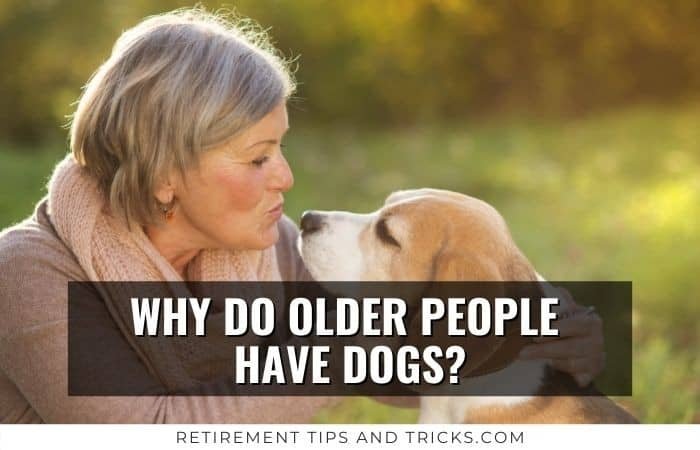
Many older people have dogs. Before getting a dog as a senior, you might wonder why do older people have dogs. In this article, you’ll learn how older people can benefit from having a dog.
As a general rule, older people have dogs for companionship. The bond with their dog helps to avoid loneliness and keeps them active.Older people are more physically active when having a dog because they go outside more often. Having a dog helps to increase social interaction among older people. Research shows that having a dog can also reduce stress and the risk of heart disease.
I’ll share more about the benefits of having a dog for older people. Things you need to know before getting a dog and the possible downsides of having a dog as a senior. Let’s learn more!
Reasons Why Older People Have Dogs
There are many different reasons why someone chooses to have a dog. Some older people are looking for companionship; others just want more physical activity and feel like having a dog can help them reach that goal.
Some people have had a dog their whole life, since they were a kid, and are just used to having a dog around the house. And there are the people that have a dog without a specific reason. Sometimes it even feels like they have a dog so that they can yell at it. I know it’s weird, but I’ll share a real example of it later in this article. First, let’s find focus on a few more popular reasons why older people have dogs.
1) Companionship, Most Popular Reason To Have A Dog
Most older people have a dog for their companionship. One of the most difficult challenges for older people is loneliness. Becoming lonely is something we all want to avoid. However, with aging, the threat of loneliness is becoming more real every day.
In fact, according to a recent study from The National Academies of Sciences, Engineering, and Medicine (NASEM), 25% of adults in the age of 65 and older living in the United States are considered socially isolated. Even one-third of adults in the age group of 45+ experience feelings of loneliness regularly. The CDC mentions loneliness as a serious health risk among the elderly population.
When you’re lonely or socially isolated, it’s crucial to find help, which can be difficult, but contact your doctor or someone you know and ask them for help. It’s the best thing you can do.
Let’s get back to the most popular reason why older adults have a dog, for their companionship. Companionship equals fighting loneliness. We all know if we have a good friend, companion, or someone we can trust, we don’t feel lonely. The bond someone can create with their dog can also become very special. Dogs are often referred to as “a men’s best friends.”
Most dogs are very loyal and known to be happy if they see their boss/ owner. For older adults, it’s nice to have a dog around where they can share their day with. Dogs can help you feel happy again, go outside, or just relax for a while. The dogs’ instinct knows when something is wrong, and when you have a good connection with your dog, they will come to you to cheer you up.
2) To Increase Social Interaction
So, we just learned that becoming socially isolated is a significant risk for older people in the United States. 1 out of 4 older adults aged 65 is socially isolated. Having a dog is not only suitable for companionship and to find a buddy, but it’s also ideal for increasing social interaction. And thus to avoid becoming socially isolated.
Having a dog helps older adults to avoid loneliness and increase their social interaction with others. When having a dog, you get outside more often, simply because dogs need to go for a walk several times a day. During these walks, you often meet other people. Somehow, it’s easier to connect when there’s already something to talk about, like your dog. Many people create new friendships during the daily dog walks.
On average, a dog needs to go outside 3 or 4 times a day, depending on the dog breed. So, you’ll get enough time outside when you do all these walks. Many older people join a dog walking group so that they can go out with other people. This way, the activity of going outside gets fun and is perfect for social interaction. A great way to find dog walking groups close to you is by using the platform Meetup.
3) To Yell At Them
I’m writing this article while I’m on a campsite in our caravan. It’s a beautiful place here, and our neighbors happen to be an older couple with a dog. I didn’t ask them why they have a dog, but I noticed how they interact with their dog, and it occurred to me that it can be a reason for people to have a dog. It’s a little different than only for companionship or increases their social interaction. It feels like they only have their dog to yell at him, so they can focus their frustrations on their dog.
When their dog barks, they instantly react with ‘SHUT UP!’ It doesn’t matter if it barks because another dog crosses or the dog greets one of its owners. With every bark, we hear an ‘SSST,’ ‘SHUT UP!’ or ‘STOP BARKING!’
When their dogs jump happily around their caravan, they instantly react with ‘GO BACK TO YOUR PLACE.’
It’s like they have a dog to get rid of their own frustration and aggression. It wouldn’t be my first choice to have a dog, but it might work for some people. Personally, I just feel sorry for the dog, but then again, he seems a happy dog.
4) For Physical Activity
Many older people focus their way of life on healthy aging in mind. They avoid things like fast food because it increases their chances of becoming more unhealthy. According to the CDC, one of the most important things someone can do for healthy aging is getting enough physical activity.
Somehow we just don’t move enough. The BLS Time Use Survey shows that retirees and older adults spend most of their time watching TV instead of getting more physical activity! Move More, and Sit Less is the CDC’s slogan when it comes to physical activity for older adults.
Having a dog helps seniors to move more and sit less. The CDC mentions their physical activity recommendations to move at least 150 minutes a week when an older adult is in a general health condition. This recommendation comes down to around half an hour a day.
You’ll quickly reach these recommendations when you have a dog when you do like three walks a day. Most people walk their dogs for around one hour for each walk. And when you go for dog walking with a walking group or with friends, the walks are often much longer because of the social interaction you’ll get.
Walking or hiking, which is walking in a more natural outdoor environment, is one of the best activities the elderly can do to stay fit. Read more about the benefits of hiking in my article, The Complete Guide Why Hiking Is Good For Seniors
Is It Good For Older People To Have A Dog?
In general, it’s good for older adults to have a dog. According to many studies, stress reductions, lower risk of heart disease, and increased social interaction are the most regular benefits for dog owners.
We just discussed the most popular reasons why older people have a dog. You might have noticed that many of these reasons are related to the feeling of well-being among older adults. So this is why older adults can highly benefit from having a dog.
5) Lower Risk of Heart Disease
According to a Swedish study mentioned in Harvard Health Publishing, dog owners are less likely to die of heart disease. In the study, which took 12 years and included 3.4 million Swedish adults, researchers used the data from national health resources and dog ownership registers. They found that dog owners had a lower risk of dying from heart disease.
The researchers say it was the largest study focused on dog ownership and human health in history. The study was published in 2017, but it is still relevant today. According to the researchers, dog owners are more likely to have more physical activity and social interaction than people who don’t have a dog. They say that dogs may ease stress, fight loneliness and inspire people to be more active. All elements that benefit a general health condition.
6) Boosts Your Mood & Brain
I found another interesting article from Cleveland Clinic, which states that dogs help their owners to boost their mood and keep a healthy brain. According to that article, simply petting a dog helps to lower stress levels in our bodies. So dog owners can benefit from this even more!
Many older people struggle with a daily structure. Their schedules aren’t as busy as they used to be, so it’s hard to get up in the morning and stay active. However, dog owners often don’t have this problem. For dog owners, it’s easy to get up, take care of their dog, and go for a walk.
Having a daily structure helps to stay active, to feel good. So, when you’re an older adult having trouble with creating a daily structure for yourself, you might want to think about having a dog. There are many lifestyle-related and health-related benefits of having a dog. And if you aren’t convinced yet, I recommend reading my article 10 Scientific Based Facts How Pets Help Old People
Things You Need To Know Before Getting A Dog
Older people who are getting a dog should consider some important things before actually getting one. Simply because having a dog means responsibility. Of course, the benefits are great and related to a more healthy lifestyle. However, you also need to establish if you can take care of a dog now and in the future.
So, let’s look at some important things to consider before getting a dog as a senior.
8) Activity Level of The Dog
Because many dogs have a high activity level, you need to consider if you’re up to this. For example, when your dog needs to go for a walk 4 times a day for a minimum of 2 hours, it takes a lot of time. Ask yourself if you want to spend so much time on dog walking and if you can physically do this as well. If not, find yourself a breed that needs less physical activity.
9) Dog training
Whether you get a puppy or an older dog, a dog needs training. Simple commands like sit, walk and fetch you need to learn to the dog. But also housebreaking, so the dogs learn to live in your house without peeing inside, etc.
One of the most helpful online courses for dog training is the MasterClass from Brandon McMillan, which you can find here;
Depending on your age, you want to consider the lifespan of the dog. Especially when you take a puppy. Maybe you’ll outlive your dog, so that means you need to create a plan for what happens to your dog when you die. If you fail to do so, the dog will end up at a dog shelter.
Caring costs are also an essential factor to consider. You’ve worked hard to earn a good retirement, so you must calculate if you can afford to have a dog.
11) Lifestyle plan
Maybe you have planned a lifestyle in retirement without a dog, but now considering getting a dog. Figure out for yourself if having a dog and taking care of it can fit into your retirement lifestyle. When you feel you need to give up more than your will gain, having a dog is probably not something for you.
Recently, I published some other helpful articles about having a dog or pets in general as an older adult. You might find them interesting to read as well;
As we age and are busy with everyday life, family, and career we sometimes forget what activities we love to do to pass time. And that’s why you might wonder, how do I find a hobby at 60? Well, no need to look any further because with this complete guide I’m going to help you to find a hobby that you’ll love. So let’s start unpacking all these tips.
Tip 1: Know The Goal Of Your Hobby
On the quest to find your new hobby you can pause for a second before you try anything and think about what the goal of your hobby is. Is it something similar to existing hobbies of yours or do you want to try out something completely new?
Every person is different. So everyone is looking for different things in a hobby. Some people are more active than others and would like to have an active hobby. Others are more creative and would like to have a creative hobby.
The below questions can help you narrow down your search to hobbies that align with your preferences.
Questions To Ask Yourself To Find Your Hobby
Do you want a hobby that helps you relax?
Are you searching for a hobby that keeps you fit?
Do you want to learn a skill?
Would you like to express yourself?
Do you want to escape reality?
Or would you like to earn money with your hobby?
Hobby Ideas That Align With Your Goal
Now that you’ve got an idea in which area you should look for to find your new hobby, let’s share some ideas on what hobbies are out there that can possibly be your next hobby. Or give you some inspiration to move forward in the right direction.
Relaxing Hobby Ideas are reading, meditation, yoga, gardening, listening to music, etc.
Active Hobby Ideas are fitness, hiking, a team sport, dancing, cycling, etc.
New Skills Hobby Ideas: play a musical instrument, acting, learning a new language (yes you can learn a new language at 60). A great platform for learning new skills is Masterclass. I tell you more about it in a few.
Expressing Yourself Hobby Ideas can be painting, journaling, creating music, writing, etc.
Escape Reality Hobby Ideas are puzzling, board games, watching a film, gaming.
Money Earning Hobby Ideas are selling arts and crafts on Etsy, blogging, freelance gardener/ accountant/ handyman.
Tip 2: Go Back To Your Childhood
The best way to have success in finding a hobby at 60 is to revisit your childhood. What did you like to do as a kid? What hobbies did you have? Chances are you still might like the same activities.
As a kid, you only did things you loved to do. And as you’ve gotten older more and more time was taken away from the things you loved to do and more time went towards things that needed to be done. So it’s not like you stopped your childhood hobby because you lost interest. Life just got in the way and over time you probably forgot about it.
That’s why one of the best things you can do to find a hobby at 60 is to reclaim your old hobbies. Try them out and see what were the things you loved about them. Perhaps you can pick it up and continue where you left off. Or you’ve learned the common factors about what you loved about it and can use this information to find a similar kind of hobby.
On a different note. Do you feel you can get more out of your retirement? Are you truly happy in life? Well, if you want to make your retirement the best time of your life I have something amazing for you. I wrote an entire ebook for retirees to help them have the retirement of a lifetime. Check out my ebook: Five Steps To Happiness In Retirement if you’re curious.
Another way to find a hobby at 60 is to follow a class. You can learn more about an interest of yours, upgrade your skills, or explore something totally new and see if you like it by following a class. Also, a class teaches you more about a topic, but also more about yourself and what you love and don’t like.
It’s not about choosing the right class. Following a class and finding out you don’t love it is also useful information that helps you in the right direction towards finding your new hobby.
One of the best platforms to explore all sorts of new hobbies is Masterclass. You instantly have access to over 100 different classes that you can follow in a variety of topics; music, food, arts, sports, business, designing, lifestyle, writing, etc. Oh and did I mentioned these classes are all taught by the world’s best in their field. To name a few: Gordon Ramsay, Anna Wintour, Serena Williams, Alicia Keys, Thomas Keller, Neil Gaiman, Margaret Atwood, and the list goes on. You can learn at your own pace, time, and space. It works just as easily as Netflix.
At 60 you’ve done a lot in life. But there are also things you didn’t do because perhaps you didn’t have the time, energy, or money to do it.
Complete the sentence: I’ve always wanted to do…
Maybe you can make a list of things with things you’ve always wanted to do. Possibly one of the things on your list is your new hobby.
Tip 5: Turn An Interest Into A Hobby
Everyone has a lot of interests. But that doesn’t mean it’s a hobby.
An interest is something you want to know more about. You’re curious to learn more. It’s an intellectual action you do. A hobby is an enjoyable leisure activity that also requires physical action.
But interest can turn into hobbies. Do you have an interest that you want to learn more about that you can also turn into a hobby that requires physical action and more commitment?
Take a closer look at your life and notice what you buy, watch and read. And see if you can find common factors.
You can also check out these questions to figure out what interests you:
What activity is a stress reliever for you?
What makes you excited?
What is a topic you can read 500 books about and you’ll never get bored?
What do you love to talk about?
What gives you satisfaction, joy, and happiness in life?
What was the last activity that made you forget about time or forgot to eat?
With the answers to the above questions, you can search for hobbies that are similar to your interest.
Tip 6: Get Inspiration For That Spark
Another way to find a hobby at 60 is to get inspired and see what makes you light up.
You can visit all sorts of places or do different things to find inspiration. For example, visit a museum, the library, a bookstore and see what areas you’re drawn to. Even conversations with friends, family, or a stranger can give you inspiration for your quest to finding a hobby.
A lot of people throw their questions up in the air or as they call it into the universe and see what answers come back. For example, you say out loud or repeat a couple of times in your head: what is my hobby?. And then let it go, have trust, patience, and be aware of signs that guide you towards the right direction.
As long as you stay open to new ideas, perspectives and signs you’ll definitely find inspiration everywhere you go.
Tip 7: Turn An Everyday Activity Into A Hobby
There are a lot of activities you do every day. And you can consider these activities all potential new hobbies of yours.
Cooking, house maintenance, gardening, organizing, socializing can all turn into a new hobby. Especially if you’re retired you have more time to spend on activities you can try it out to see if there is something more to it that you love that can be a hobby.
Tip 8: Ride Along Someone Else’s Hobby
If you don’t have a clue where to start or what it is that you would enjoy you can always hop on someone else’s hobby wheel wagon. Ask a neighbor, friend, or family member if you can join their hobby for once just to try it out. After you’ve experienced something you’re more likely to continue your quest and you’ve new information that helps you to find your hobby.
Perhaps it’s a home run. And if not, at least you had some fun trying it out. And that leads me to my final tip.
Tip 9: Try Things Out Until It Fits
You don’t know if you like an activity or potentially love it if you haven’t tried it out. You need to take action and do a hobby before you know it’s something for you. That’s why it’s important to keep trying things out until you have found the hobby that you love.
And as I mentioned earlier, Masterclass is the perfect place to try out all sorts of potential hobbies until you’ve found the one thing that fits.
When you are helping out seniors, you might ask yourself, what can seniors do to keep busy? It can be difficult for seniors to find activities to keep busy, especially when they have mobility issues. Sometimes you need some helpful inspiration for fun activities for seniors.
In this article, you’ll find 30 activities for seniors to keep busy. All the activities I’ll share a both great to do for seniors with or without mobility issues. Let’s get inspired!
I love learning new things. One of the platforms I like most is MasterClass. On the MasterClass platform, you can follow video classes from the world’s best and most successful people. There are over 100+ classes in different categories like cooking, writing, sports, and so on. Some famous teachers are Gordon Ramsay, Samuel L. Jackson, Brandon McMillan, Jessie Krebs, etc.
You can get full access to the MasterClass platform by signing up for an annual membership that costs you only 180 USD a year. That’s less than 1.80 USD per class! The best thing is that they keep adding new, inspiring classes every month, so you get even more value for your membership!
Using the MasterClass platform is easy for both seniors and seniors with mobility issues. The only thing you really need is a device and a working internet connection. You can even download the classes to your device so that you can watch them later when you’re not connected! I genuinely feel it’s the perfect platform when you want to learn new things and prefer to stay at home.
The article on Harvard Health Publishing that I mentioned before describes that you best learn new things when you get out of your comfort zone. Learning a new language can be a great way to stay busy and get out of your comfort zone.
When you start your first conversation in a foreign language, it might make you uncomfortable. You maybe feel a bit scared to make mistakes, but it’s also funny, and you’re learning!
I love to learn new languages so that I can easily connect with people during traveling. Also, when learning a new language, I feel I get a better understanding of the culture. We’re traveling to Portugal to stay there a while at the end of this year, so I’ll soon start with learning Portuguese.
I don’t like using books and following a class in a classroom to learn a new language. Being busy with all kinds of other things, I love to learn at my own pace. For seniors, this might work better as well. Yes, you need to get out of your comfort zone when learning new things, but learning at your own pace is always the best way to succeed. When it comes to language learning, I recommend using the application Babbel, which is one of the most trusted language applications available. I use +Babbel myself and really love it! You’re actually learning a new language without the feeling that you are following a class. The lessons are fun and engaging, which makes it easy to remember things.
3) Find A Hobby
Seniors often struggle to find a new hobby. However, a hobby is a perfect way to stay busy. The struggle for seniors to find a new hobby is probably related because they forgot about the things they like doing. Many people that are first retiring struggle with this as well.
When you’ve worked at a company for many years, most people didn’t have time for a hobby. So, when you have more leisure time in retirement as a senior, you need to re-find what you like doing to find a new hobby. One easy way to do this is by trying out different things.
Trying out different hobbies, like one each month, is a great way to stay busy as a senior. To get inspiration for hobbies, I love using Cratejoy. Cratejoy is a craft subscription service where you get a hobby craft delivered at home every month. It’s literally the easiest way to find a hobby as a senior and very easy to use when you have mobility issues. You can sign up for Cratejoy here.
4) Start gardening
Gardening has many health benefits for seniors. When you start gardening, you are physically active, which is, according to the CDC, one of the most important things you can do for healthy aging. Also, gardening takes place outside, so your Vitamin-D levels will rise, which in turn help you to feel more energized and happy.
Most gardening takes place in a group, for example, when you start gardening in a retirement community. This way, gardening also helps you to stay socially active, which is important to avoid loneliness.
Gardening is an activity that seniors who are still physically fit and seniors with mobility issues can do to stay busy. When you have mobility issues, you can use gardening tools (available on Amazon) to get around the gardening. Also, starting a herb garden can be a great idea when you have mobility issues. A herb garden needs less physical work, which is easier to do.
5) Get A Pet
Pets are great for seniors to keep busy. Pets need all kinds of attention, so getting a pet is the perfect thing a senior can do.
Let’s say you get a dog as a senior, maybe a puppy. The puppy needs to get training first. Also, you need to go out with the puppy several times a day. It needs attention, just like a human. But when you bond with the dog, you’ll have a buddy for the rest of your life. So, pets are not only great to keep busy, but it’s also a perfect way for seniors to avoid loneliness.
When you have mobility issues as a senior, it’s still great to get a pet. Maybe you can get a service dog, which can help you with everyday activities. Still, when having a service dog, you need to give it attention, just like with every other dog, which helps you keep busy, of course.
Doing sports is important for everyone. Like I mentioned earlier, physical activity is one of the most important things you can do for healthy aging. Also, when you have mobility issues.
If you’re still fit as a senior, you can easily try out all kinds of sports. Maybe you’ve played basketball when you were younger and want to do this again, just go for it!
Swimming is a sport that can be great for people in a generally healthy condition or when having mobility issues. My mom has mobility issues. She has had trouble walking since an accident many years ago. However, she still goes to a public swimming pool once or two times a week.
6) Start Volunteering
Volunteering is a great way to keep busy as a senior. Also, you get involved in the community and meet a lot of new people while volunteering.
Volunteering is an activity many seniors do to avoid loneliness and feel they need to help other people. Seniors who want to start volunteering can best look at their community center first and ask if there’s a volunteering position available. Maybe they can help during events etc.
Being outside is great for your health. It helps with getting enough vitamin D if the sun is shining, of course. Also, it just gets you energized. When I don’t get outside for a day, I just don’t feel good. I love to go for a walk in the park or going to the beach. It’s probably also the reason why I love camping, you just spend so much time outdoors.
A great activity to do outdoors is hiking. Let’s find out more about that;
8) Start with Hiking
Hiking is a great activity for seniors to keep busy. It’s probably not the best activity when you have mobility issues, but when you are generally fit, you can easily start hiking.
When you go hiking, you are outside in nature. Most hiking takes place in natural parks on hiking trails. So, for a good hike, you leave the urban area. Hiking is perfect because you can do it at your own pace. Most people hike in groups, so it’s also beneficial for your social interaction. Learn more about the benefits of hiking in my article, The Complete Guide Why Hiking Is Good For Seniors
9) Start Reading Books
I love reading books. As a senior, you have probably enough time to read books. It’s an activity that keeps you busy, and both are easy to do for seniors with and without mobility issues.
When you have trouble with your eyes, which makes reading more difficult, many helpful tools are available to solve the problems. When reading is actually not possible, you can also start listening to audiobooks.
My grandfather, for example, he’s blind for a few years but still loves ‘reading.’ He always listens to audiobooks using his smart home device. It helps him to keep busy. Sometimes we read the same book together so we can talk about it just like in book clubs.
10) Join A Bookclub
If you love reading and love to socially interact with other people, you might want to join a book club to keep yourself busy. A book club is nothing more than a group of like-minded people discussing the same book they decided to read. It’s fun to talk about books with other people because this way, you get different perspectives about the book and learn from others.
11) Listen To Podcasts
When you don’t want to read books but still love to listen to things, you might want to start with listening to podcasts to stay busy.
Podcasts are basically recorded interviews with a minimum of 2 people, where they discuss a specific subject. For example, how seniors can keep busy. You can find podcasts about all kinds of subjects.
It’s fun and easy to listen to podcasts, and you can do it everywhere you go.
When you use a smartphone, you can easily find podcasts using the standard podcast device, for example, on your iPhone. Most shows allow you to download episodes for when you’re offline.
12) Play Boardgames
Do you love playing board games? Find yourself a buddy and start playing a game once a week. It’s a great way to keep busy as a senior. Maybe you’re helping a senior with keeping busy, so ask them if they love to play board games. YOu can discuss different games to play so that you can vary and don’t get bored of playing the same game every week.
Boardgames, and playing games in general, is, of course, a fun thing to do. But it is also great to train your brain and slow down cognitive aging. Because when playing a board game, you’re constantly learning and adapting to a situation, which is great for brain training.
13) Start Virtual Travel
Traveling isn’t what it used to be since the Covid pandemic. It’s still able to travel, but a whole new dimension has developed virtual traveling. We were actually a kind of early adopters when it comes to virtual traveling. Even before Covid! Since 2017 we’re traveling the world, and in the first years of our world trip, we focused on making travel videos for our YouTube channel. It was a fun experienced. You can find out the channel here.
Virtual travel is great for seniors to keep busy. It’s an activity both for seniors with disabilities and seniors who are still fit. You can go everywhere where you want, just from your couch or lazy seat. With the high-quality videos today, you’ll have a unique experience.
One of the best ways to start virtual traveling is by using a Virtual Reality application and a Virtual Reality System (available on Amazon).
14) Join A Senior Community
Being part of a senior community helps seniors to keep busy. Senior communities are often the most active communities out there. Sometimes even more active than regular church communities.
My parents-in-law live in a retirement community, and they love it! It’s fun to see how the seniors in their community look out for each other. When someone isn’t feeling well, the neighbor helps out with groceries, cooking, etc.
An active senior community is perfect for keeping busy, but it also helps fight loneliness. You meet many other people within the community where you can share your activities, which helps seniors have fun together.
Many seniors want to start with writing. However, most of the time, they don’t know where to start or think that they’re too old to become a writer. No one is actually ever too old to become a writer. I explain this in more detail in my article You CAN Become A Writer Later In Life! (Read This)
Writing is a unique and mindful experience that helps you keep busy. When I’m writing, for example, for this website, I’m always so focused that I forget about the other things around me. It helps me clear my mind and be in the present moment. It’s actually very mindful now that I think of it.
When you know any seniors who want to start writing but don’t know how I recommend giving them an annual membership for MasterClass. This way, they can follow very helpful MasterClasses from the best writers in the world.
The best thing about becoming a writer is that you can do this activity easily from your home. So it’s perfect for seniors with mobility issues as well. Everyone can do it!
Let’s take a look at more inspiring and fun activities for seniors to keep busy in the following list;
16 Babysit Your Grandchildren
17 Start Writing
18 Learn To Play A Instrument
19 Follow A Cooking Class
20 Start With A Craft (Tinker)
21 Spend More Time With Family
22 Become A Coach
23 Start Blogging
24 Start A YouTube Channel
25 Learn Breadmaking
26 Start with Woodworking
27 Start Painting
28 Build Miniature Houses
29 Start with Diamond Painting
30 Go To The Movies
The Benefits Of Keeping Busy For Seniors
Several studies showed that busy seniors had better cognitive function. In other words, their brains were more fit than seniors that didn’t have a busy schedule. Scientists think that this is because having a busy schedule helps you get out of your comfort zone and stay active.
We all know that an active lifestyle is related to healthy aging. Other studies showed that seniors with broad social interactions are often more active. Seniors that focus on training their brains, for example, learning new things, can slow down cognitive aging.
When we want to know the benefits of keeping busy as a senior, we only have to look at the world’s blue zones. Areas in the world where people get much older than average, often in a healthy way. The blue zones have the most centenarians in the world (people of an age of 100+). Learn more about the blue zones and their lifestyle in this book; The Blue Zones, Second Edition: 9 Lessons for Living Longer From the People Who’ve Lived the Longest (available on Amazon)
The lifestyle in the different blue zones is similar, and next to a healthy diet, involvement in their community, the seniors and elderly have all a busy schedule. It helps them to focus on their purpose in life and stay fit. So, when a senior doesn’t have a lot of activities planned, it might get time to focus on creating a more busy schedule!
Are you wondering how a pet can help seniors and older people? For my research for this website, I talk to many retirees and older people. I noticed that older people with pets seemed to be happier. I listed the benefits of having a pet in this article.
1) Older People With Pets Are More Active
Being physically active is one of the most important things you can do to healthy aging. The CDC has even very specific advice when it comes to physical activity for older adults. They recommend at least 150 minutes of moderate physical activity for people with a general health condition. Pets help older adults easily reach the minimum requirements of the CDC for physical activity.
Owning a dog, for example, helps an older adult to get outside. Dogs need to go out several times a day. So even if you don’t feel like it, you still need to go for a walk.
2) A Pet Helps With Healthy Aging
A pet not only helps older people to stay active. There are many more health-related benefits when having a pet. According to this research on Harvard Health Publishing, dog owners have a reduced risk of heart disease.
Pet ownership is also related to stress reduction and lowering blood pressure. According to this research, people with their pets presents even recovered faster from stressful events.
3) Older People With A Pet Are Less Lonely
A pet is always with you. If you ever had a pet before, you’ll understand that pets help to fight loneliness. Loneliness is a major factor among older people. Often because the social circle of people who you’re involved in decreases with aging. A pet helps to fight the feeling of loneliness and is even able to comfort older people.
4) Pets Create Companionship For Older People
Like I mentioned in the previous part, loneliness is a major factor for older people. So, avoiding loneliness is important for healthy aging. Pets offer companionship for older people. Every pet owner understands that. The bond between a pet and its owner is unique. Dogs and cats are the most well-known examples of pets that can create a unique bond with their owners.
5) Owning A Pet Lowers Risk Of Heart Disease
It’s well known that pets help you to stay active. This research on Harvard Health Publishing mentions that dog owners have a lower chance of heart disease. Probably because of the extra physical exercise you get when walking with a dog multiple times a day. The 12-year Swedish study included 3+ million adults between the age of 40 and 80 years. Researchers found that dog owners had a lower risk of heart disease, and dogs ease stress, loneliness, and depression. All these things are related that pets help older adults.
6) Having A Pet Increases Social Interaction
Let’s stick with having a dog for this example. Dogs are great pets that can help older people, for example, with social interaction. Older people tend to spend most of their time at home. However, when having a dog, you need to go outside.
While walking your dog in the park, you probably meet many other dog owners and people who are just enjoying a walk in the park. When walking with a dog, it’s often easier to talk with other people, which increases social interaction. Small talk ‘what a cute dog,’ can be the start of a unique friendship you never thought would happen.
It’s important to interact with other people, also when you age. Social interaction fights loneliness, which, as I mentioned earlier, is a major factor among older adults.
7) A Pet Helps With Daily Routine For Older People
A daily routine is essential to have a sense of purpose and get up in the morning. It helps older people to stay active. With a daily routine, you often feel happier. Older people often struggle with their daily routines simply because they don’t have much to do.
Retirees, in particular, find it troublesome to create a new routine in their first period of retirement. Retirement is a major life-changing event, and for many people, it’s hard to replace a busy work schedule with much leisure time. In my ebook Five Steps To Happiness In Retirement, I share a step-by-step guide to create a daily routine. Creating a daily routine is one of the most important steps to find happiness in retirement. This ebook can be very helpful for you when struggling with creating routines and finding more happiness. You can learn more about the book here.
Taking care of a pet creates a daily routine. For example, when you have a dog. A dog needs to go out multiple times a day for a walk. But the dog also needs attention for playtime, food, washing it, and other things. It’s a daily task to take care of a dog, which creates a daily routine.
8) Taking Care Of A Pet Gives Purpose To Older People
Having a purpose is essential to find happiness. Having a pet helps other people to find their (renewed) purpose. When your purpose is to take care of a pet, you have something to get up for in the morning. Your pet awaits to be taken care of. Many pets are known to give back in attention and appreciation. For example, when you have a dog, the dog will be happy to be with you if you take good care of him.
According to Harvard Health Publishing, having a purpose in life is related to healthy aging and longevity. The research related to this article even mentions that older people with a purpose have better physical ability and strength.
So, when you’re struggling to find a purpose in your retirement, it might be time to get a pet!
9) Owning A Pet Makes You Happy
Happiness is something we all pursue in life, and owning a pet can benefit more happiness. When we grow older, our social circle often declines. In turn, this often results in less action and social interaction in our lives, decreasing our feeling of happiness.
According to this article published on Psychology Today, different studies showed that pet owners and people with enough social interaction with friends are much happier than more isolated and lonely people. The research showed that this is related to the bond you create with your pet.
This research available on Pubmed states that happiness and being aware of your happiness is related to longevity. Researchers found that higher levels of optimism are associated with a longer lifespan.
10) Pets Help Older People To Have Fun
You can do all kinds of activities with your pet if your pet is big enough, of course. Doing fun activities with a fish is much more complicated than with a dog. A dog typically reacts to what you ask of him. For example, when you play a game of fetch, dogs love to run after a ball to catch it. However, most people will probably choose a dog or cat as spet.
Doing fun activities with your pet is related to stress reduction and relaxation. According to this article on National Institutes of Health, pet interaction has many health benefits. For example, people suffering from stress-related symptoms can benefit highly from interacting with a dog or cat.
11) Service Pets Can Help With Aging in Place
Service pets can help older adults with aging in place. Meaning that older adults can live longer independently when they can use a service pet to help with daily activities. Service pets are different than having a normal pet because they are trained differently.
Aging in place is important for many elderly. Because living longer independently in your own environment is related to healthy aging. It’s not only cheaper because you need less professional help, but more important elderly people will often experience more happiness when living longer in their own homes. How great when a service pet can help with this.
Most service pets are specific dog breeds, the best-known breed is a labrador. These dogs are friendly, responsible, and easier to train in a specific program how to take care of older adults for example.
There are many different service pets available. Sometimes service pets only help with daily tasks or to stick to a routine that can help to get more happiness. However, it’s also possible that a service pet has a larger role and is more therapeutic based to fight depression or other things. If you think you need a service pet it’s important to talk to your doctor and find professional help first.
How To Choose The Right Pet For An Older Adult?
So, owning a pet is helpful for healthy aging. We discussed that pets help seniors be more active, have more social interactions, and increase happiness. You probably are convinced that you need a pet, for example, a cat, as a senior , but still ask yourself how to choose the right pet that fits your lifestyle..
In the last part of this article, I’ll share some helpful tips to keep in mind when choosing a pet.
Why Do You Want A Pet?
The first question you need to ask yourself is, why do you want a pet? What do you want to get out of it? If you want a pet because research says it’s good for your health, you might want to think again.
You need to take care of the pet and really want to do this as well. Otherwise, owning a pet is getting more of a burden than something that is fun to deal with. When you’re not an animal lover, you probably don’t want to buy a pet.
The Pet’s Activity Level
When you get a pet as a senior, take into consideration the activity level of a pet. For example, when you want to buy a dog, figure out how much time this particular breed needs to go outside. If the dog is very active, and you aren’t, you might want to find a breed that fits your lifestyle.
Also, when you age, your activity level will probably decrease in the next few years. It’s still important to stay active, of course, and a pet can be very helpful with this. However, it might be more beneficial for you to find a dog that meets your activity level for the next years to come.
Caring Costs
Pets cost you money. It’s just as simple as that. You need to take care of them, buy them food, go to a veterinarian. Most pet owners buy different toys for their pets so that they can play with them. It’s important to ask yourself if you can afford to own and taking care of a pet. Calculate before buying a pet.
Many seniors love to get a dog as a pet. Some worry if they need to get a puppy or an older dog. Both can be a great fit, depending on your lifestyle. In my article, Why 70-Years-Old Should Get A Puppy, I’ll discuss the benefits of getting a puppy for seniors.